Birch vs. Poplar Core: Which Plywood is Right for Your Furniture Project?
In the Chinese wood export market, specifically coming out of hubs like Linyi, two cores dominate the industry: Poplar and Birch. While they might look similar from a distance, choosing the wrong one can lead to structural failure or unnecessary costs.
For furniture manufacturers, understanding the density, weight, and screw-holding power of these two materials is essential for maintaining a high-quality production line.
- Poplar Core: The Versatile “Local Hero”
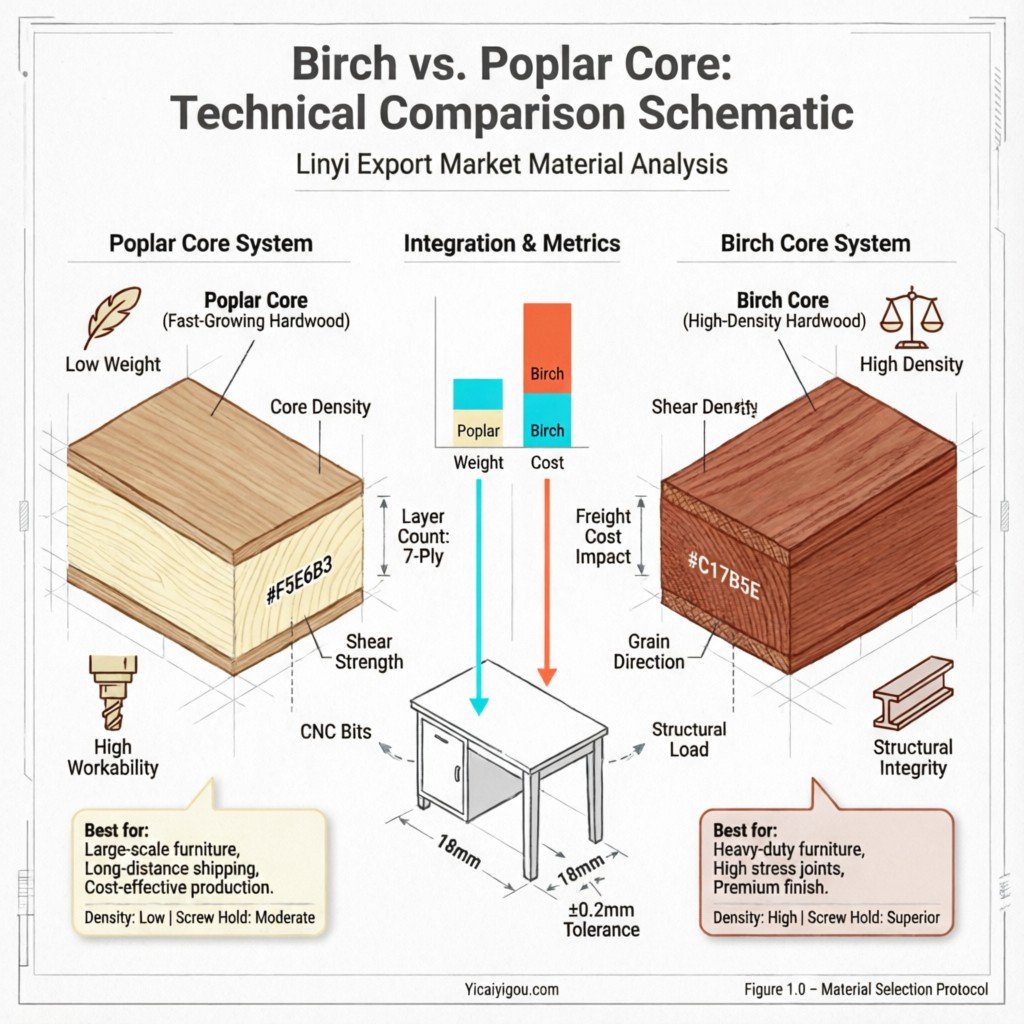
Poplar is the most widely used core in Chinese plywood production. It is a fast-growing hardwood that offers an incredible balance of weight and cost.
Weight & Workability: Poplar is significantly lighter than Birch. This makes it the preferred choice for large-scale furniture pieces that need to be shipped long distances, as it reduces overall freight costs. It is also “softer,” meaning it is easier on your CNC bits and saw blades.
Best Use Case: Poplar is ideal for the internal structures of upholstered furniture, drawer bottoms, and any application where the plywood will be hidden or painted.
- Birch Core: The Heavy-Duty “Premium” Choice
Russian or Chinese Birch is the gold standard for high-end cabinetry and architectural woodwork.
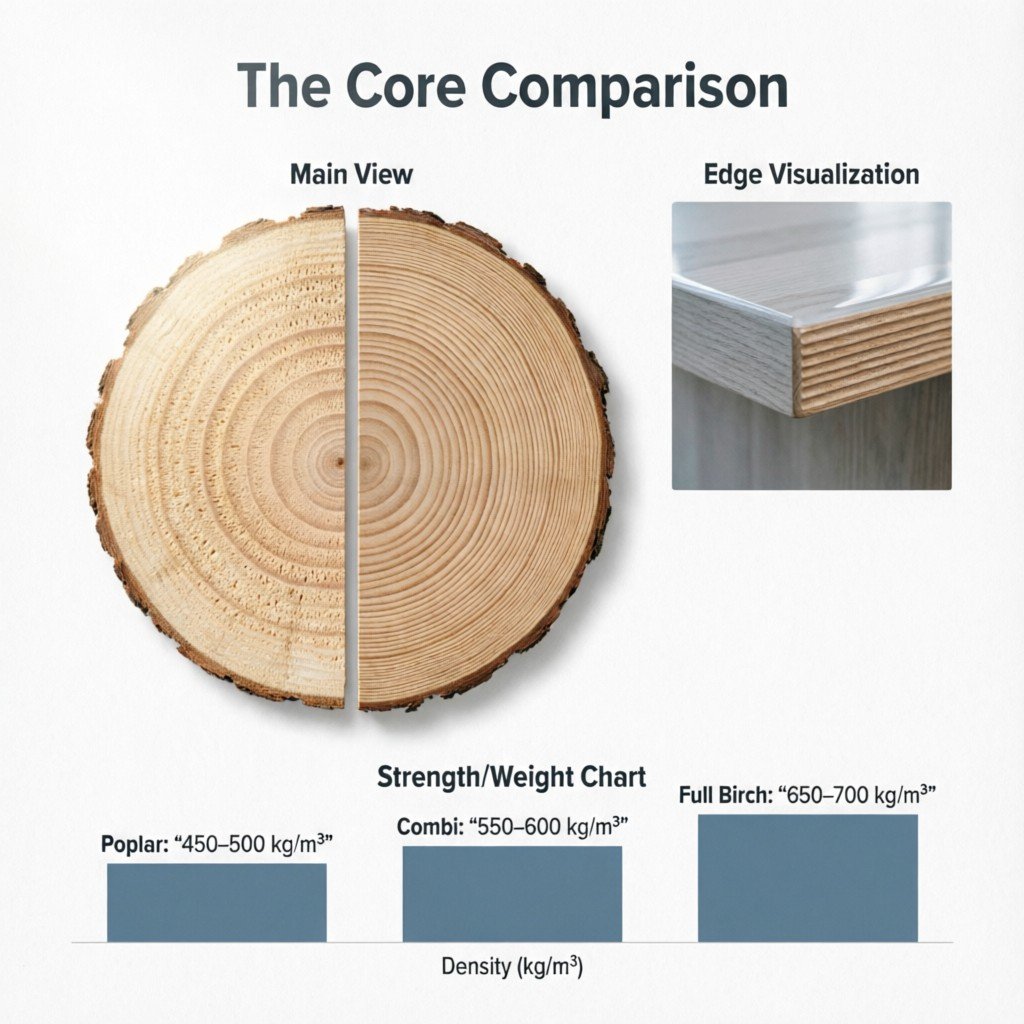
Density & Strength: Birch is a high-density hardwood. Its tight grain structure and multiple thin layers (often called “Multi-ply”) give it superior dimensional stability. If you are building a bookshelf that must support heavy loads without sagging, Birch is the only choice.
The “Edge” Factor: One of the most famous features of Birch plywood is its beautiful, clean edge. Many modern furniture designers (especially in the Scandinavian style) choose to leave the edges exposed rather than using edge-banding.
Best Use Case: High-end kitchen cabinets, children’s furniture (where safety and durability are paramount), and structural flooring.
- The “Combi” Core: The Strategic Middle Ground
If you need more strength than Poplar but have a strict budget, many factories—including those affiliated with lumberpanel.com—offer a Combi Core. This is a “sandwich” of alternating Poplar and Birch layers. It provides better screw-holding power than pure Poplar while remaining more affordable than full Birch.
Conclusion: How to Choose?
If your priority is cost-efficiency and light weight, choose Poplar. If your priority is structural integrity and aesthetic edges, invest in Birch. For most B2B furniture projects, a Birch-face/Poplar-core (B/P) combination offers the best value-to-performance ratio.
The SEO & Parser JSON Block