Understanding Plywood Grades: B/BB, BB/CC, and Commercial Overlays
In the international wood trade, “Plywood” is not just one product; it is a spectrum of quality. For a furniture manufacturer in Europe or a construction firm in the Middle East, understanding the grading system of Chinese plywood is the difference between a successful project and a costly rejection.
- The Face and Back: The “Face” of Quality
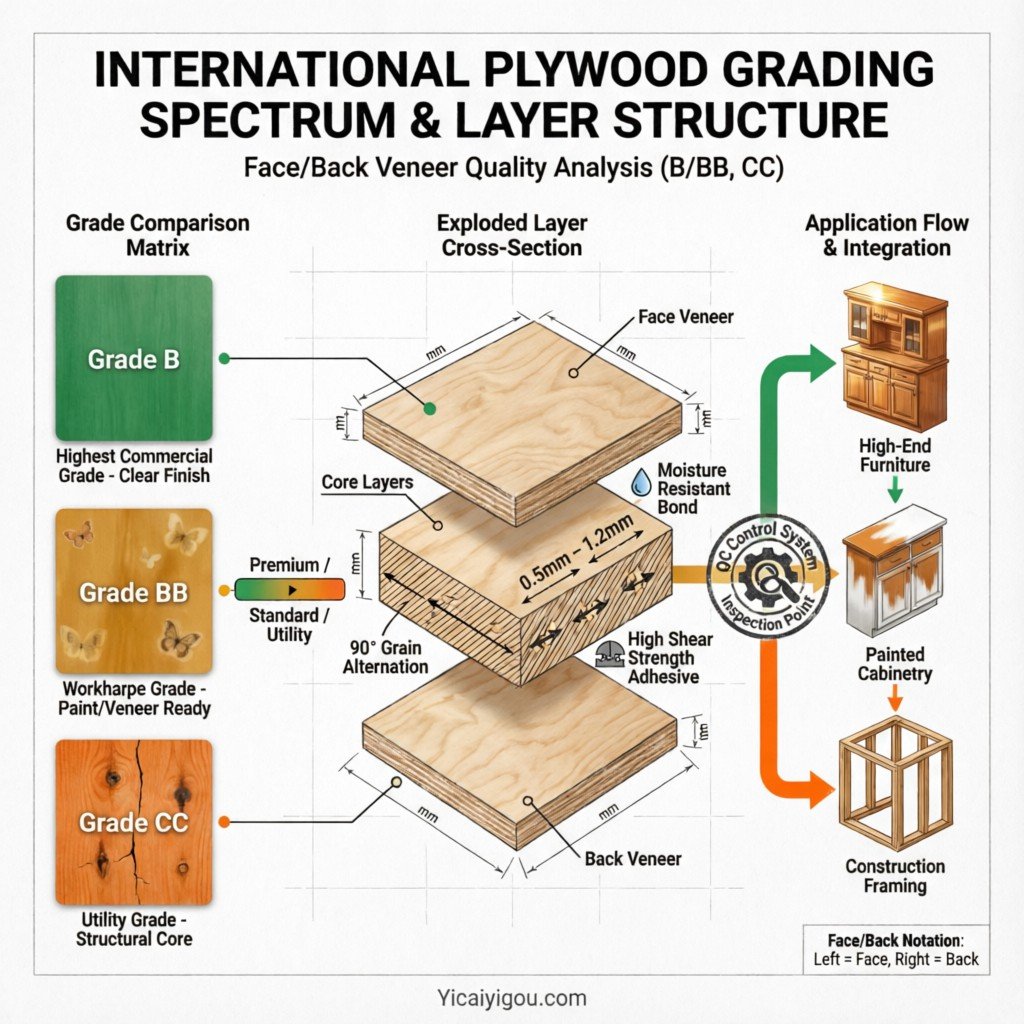
The grades you see (like B/BB) refer to the quality of the external veneers. The letter before the slash is the Face, and the letter after is the Back.
B Grade: The highest commercial grade. It is nearly clear of knots and discolorations. It is intended for natural finishes or light staining where the wood grain is the star.
BB Grade: Allows for small, color-matched “butterfly” patches. This is the “workhorse” grade for high-end cabinetry where the surface will be painted or veneered.
CC Grade: This is a utility grade. It allows for open knots and splits. It is perfect for structural components that will be hidden inside a sofa or a wall.
The Commercial Overlay (OVL)
You will often see the term “OVL” (Overlay) in Chinese export manifests. This usually refers to a thin, high-quality veneer applied over a lower-grade core. For lumberpanel.com customers, OVL provides the look of expensive hardwood (like Red Oak or Sapelli) while keeping the price competitive.Why Core Quality Matters
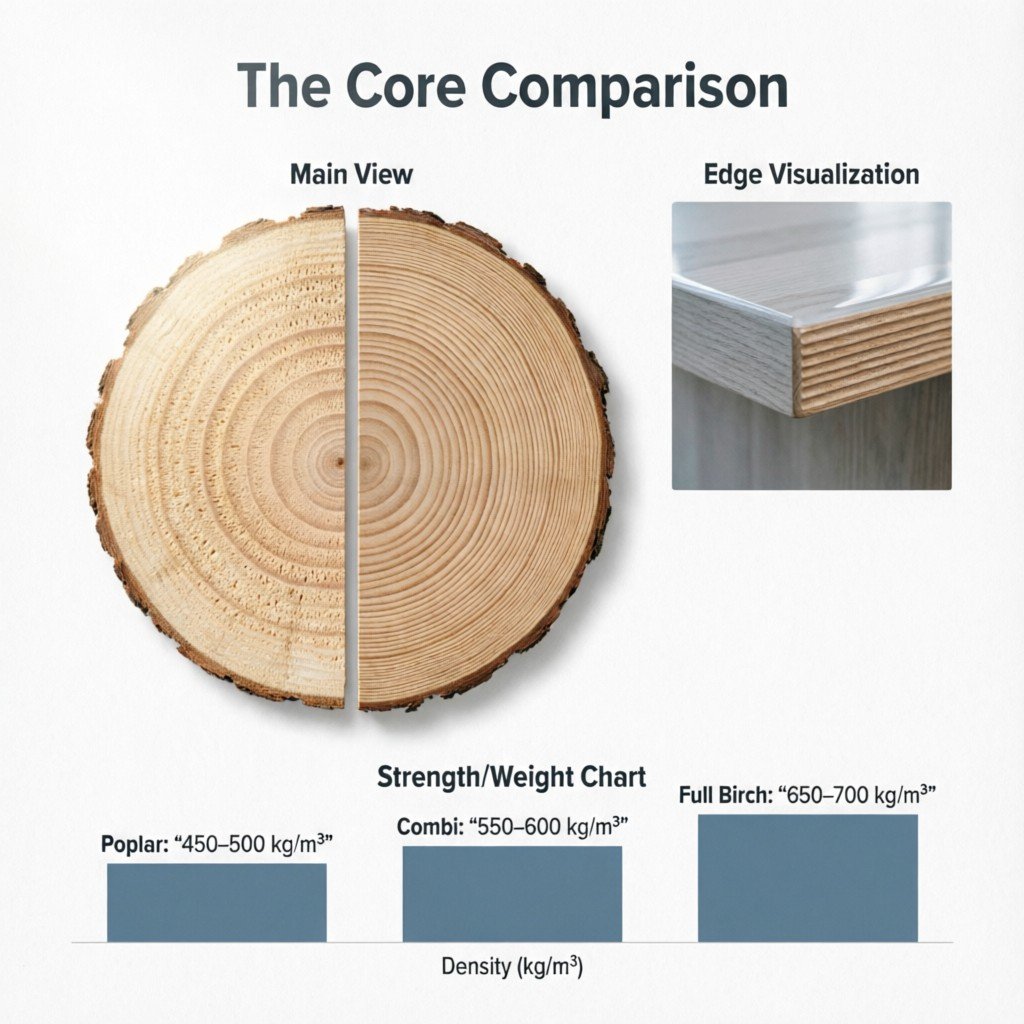
Grading isn’t just about the surface. A “Grade A” face on a “Grade C” core (with gaps or overlaps) will eventually fail. High-quality export plywood uses a Calibrated Core, meaning the inner layers are sanded to a uniform thickness before the face veneer is applied. This ensures that when you cut the board, there are no “voids” or holes in the edge.The Global Standard: Match the Grade to the Goal
Furniture Grade: Usually B/BB or BB/CC with a Poplar or Birch core.
Construction Grade: Usually C/D or CDX, focused on strength rather than beauty.
Packing Grade: The most economical, used for one-time crates and pallets.
Conclusion: By mastering these grades, you can optimize your sourcing costs. You don’t always need B/BB; sometimes a well-calibrated BB/CC is the more “resource-efficient” choice for your production line.
Image Attachment