The Science of WBP Glue: How Waterproof Plywood Actually Works
For international buyers sourcing plywood from China, the term WBP is often the most misunderstood specification. Many believe it is a type of wood, but it actually stands for Weather and Boil Proof. It describes the adhesive used to bond the veneers together.
For your projects in construction, shipbuilding, or outdoor furniture, choosing the wrong glue can lead to delamination (the layers peeling apart) within weeks of exposure to moisture. At lumberpanel.com, we prioritize educating our partners on these chemical standards to ensure long-term structural integrity.
- What is the 72-Hour Boil Test?
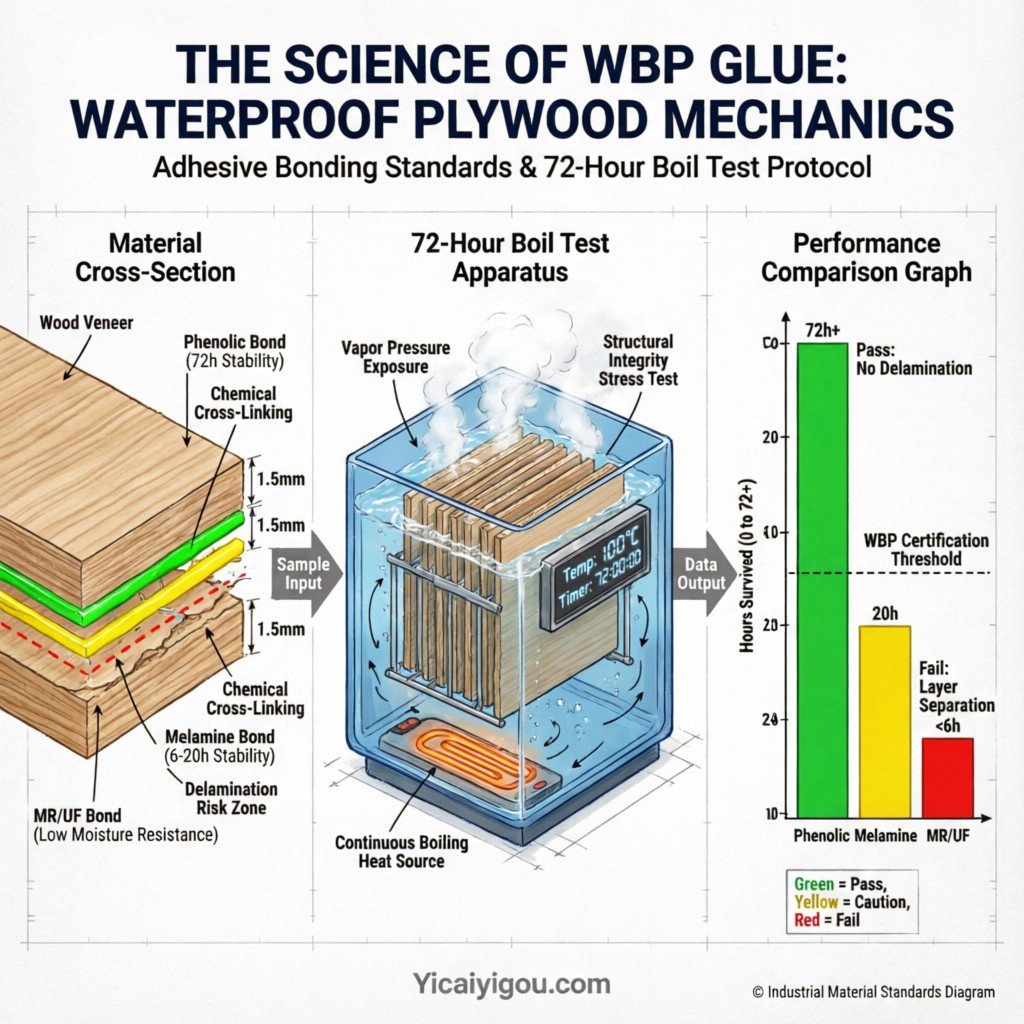
The industry standard for a “True WBP” rating is the boiling test. A sample of the plywood is submerged in boiling water.
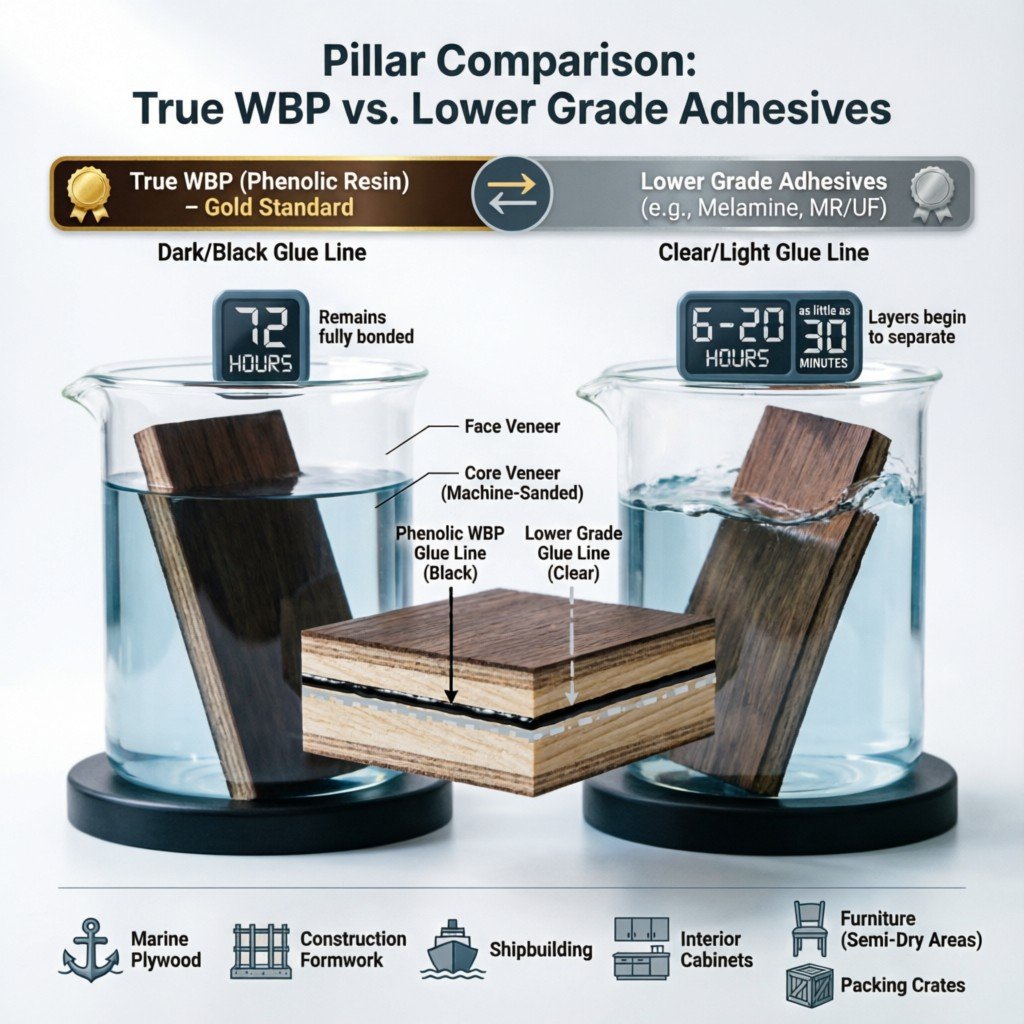
True WBP (Phenolic): Must withstand 72 hours of continuous boiling without the layers separating.
Water Resistant (Melamine): Usually lasts between 6 to 20 hours in boiling water.
Interior Grade (MR/UF): Will begin to fall apart in as little as 30 minutes.
- Phenolic vs. Melamine: Knowing the Difference
When you request “Waterproof Plywood” from a factory in Linyi, you are likely choosing between these two resins:
Phenolic Resin (The Gold Standard): This glue is dark, almost black, when seen in the plywood cross-section. It creates a chemical bond that is stronger than the wood itself. It is the only choice for Marine Grade and Film Faced Plywood used in heavy construction.
Melamine Resin: This is a clear or light-colored glue. It is highly water-resistant and suitable for “semi-external” use, such as bathroom vanities or kitchen cabinets, but it will eventually fail if left in standing water or extreme weather.
- Why Glue Choice Impacts Your Bottom Line
Using Phenolic WBP glue is more expensive, but it acts as insurance for your reputation.
Construction: If concrete formwork fails because the glue wasn’t WBP, the entire pour is ruined.
Furniture: Exporting kitchen cabinets to high-humidity regions (like Southeast Asia or the Caribbean) requires Melamine or WBP glue to prevent warping and swelling.
The SEO & Parser JSON Block
Image Attachment