In the wood export industry, “Marine Grade” is the most prestigious—and most regulated—certification a panel can hold. Whether you are building a luxury yacht hull or high-end outdoor cabinetry for a seaside villa,understanding the BS 1088 standard is critical for preventing catastrophic failure in high-moisture environments.
At lumberpanel.com, we ensure our marine-grade products meet these rigorous international benchmarks to protect your reputation and your projects.
- What is the BS 1088 Standard?
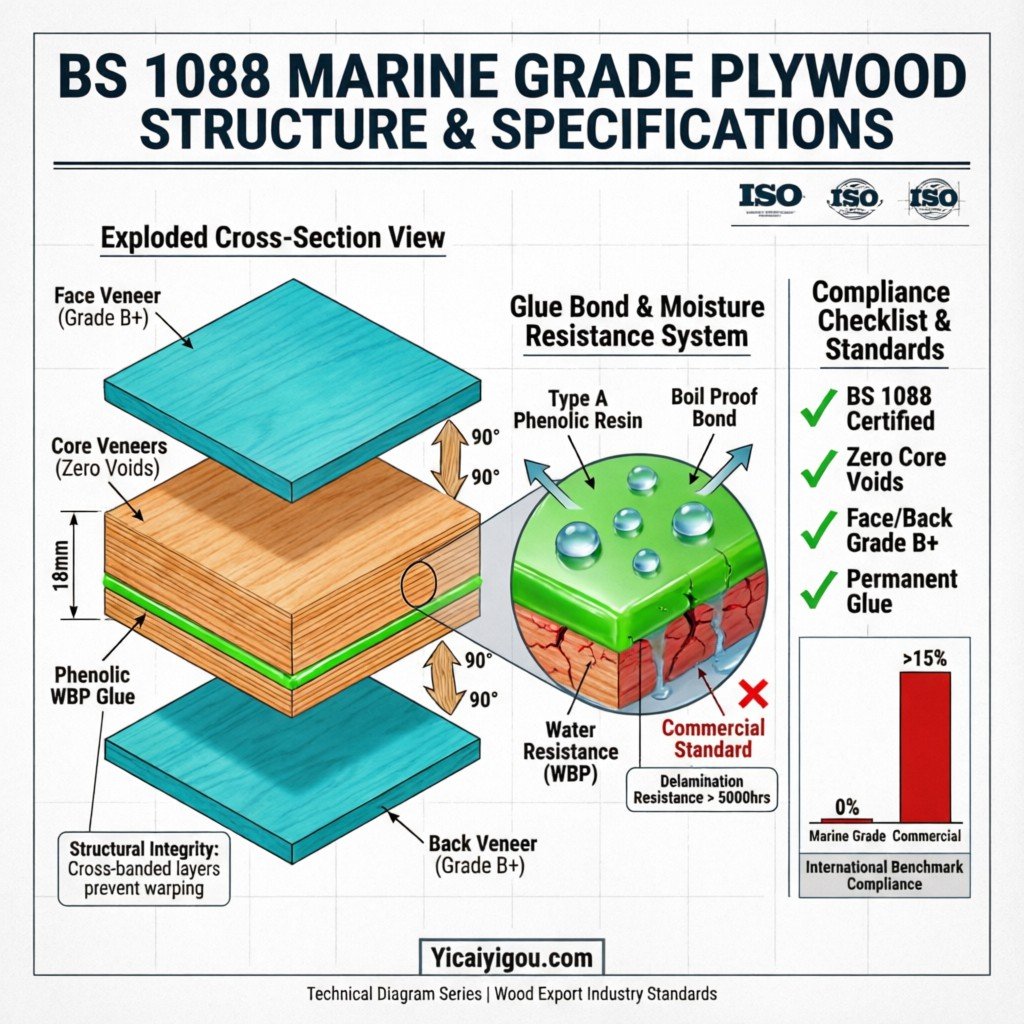
BS 1088 is a British Standard for marine plywood that is recognized globally. To carry this stamp, a panel must meet three non-negotiable criteria:
Glue Quality: It must use a permanent, Type A Phenolic WBP glue (as discussed in Article #3).
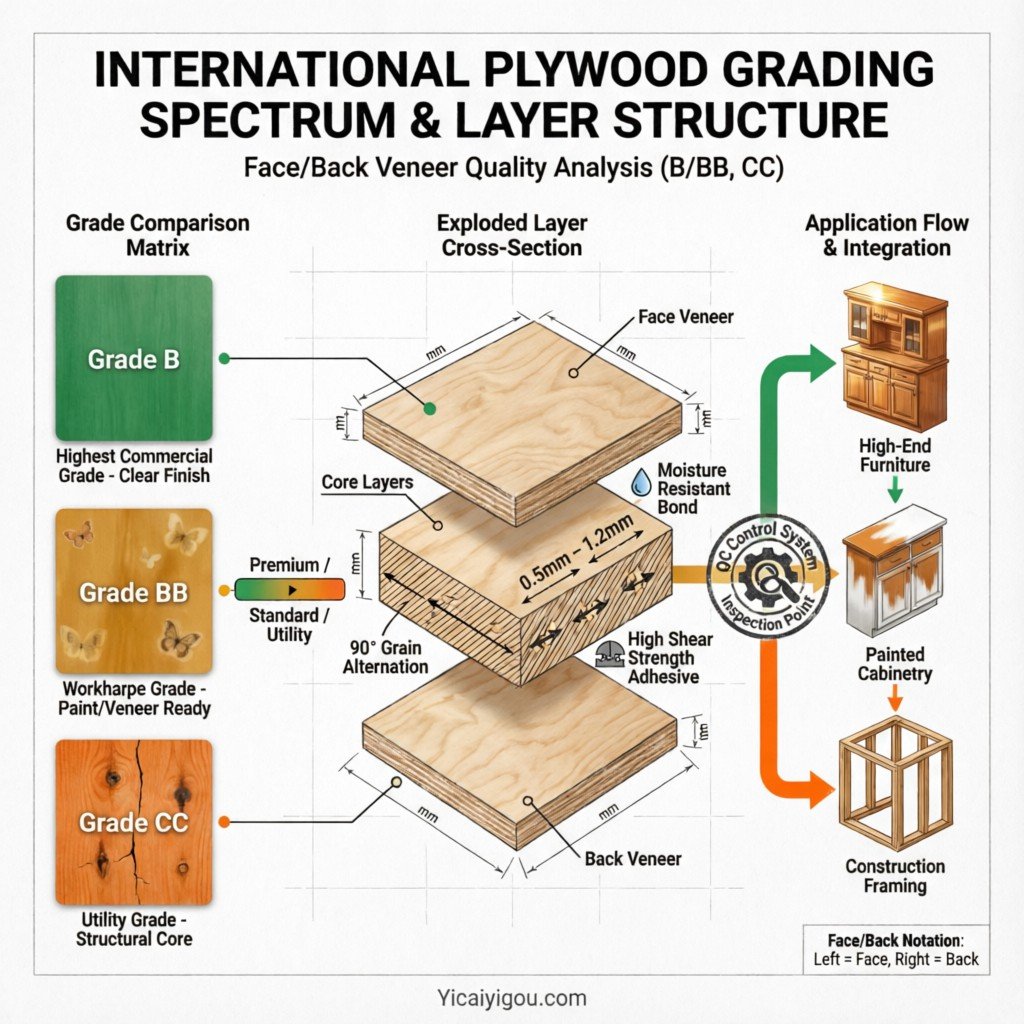
Veneer Quality: Both the face and back veneers must be at least Grade B or better, meaning they are free from open knots and splits.
Zero Voids: The inner core veneers must be “gap-free.” In standard plywood, a small 2mm gap in the core is acceptable; in Marine Grade, a single void is a point of failure where water can collect and rot the wood from the inside out.
- Marine Grade vs. Exterior Plywood
Many buyers mistakenly believe that any “Waterproof” plywood is Marine Grade. This is incorrect.
While Exterior Plywood uses WBP glue, it allows for lower-grade core veneers and small voids. Marine Grade Plywood is specifically engineered for “immersion” or constant high-humidity exposure. It is the difference between a board that can survive a rainstorm and a board that can survive being part of a boat hull.
- Sourcing Marine Grade from China
When sourcing from Linyi or other Chinese hubs, always specify the wood species. True BS 1088 Marine Plywood is typically made from naturally durable hardwoods like Okoume or Meranti. These species have a natural resistance to fungal decay, adding a second layer of protection alongside the WBP glue. - Technical Inspection Tip
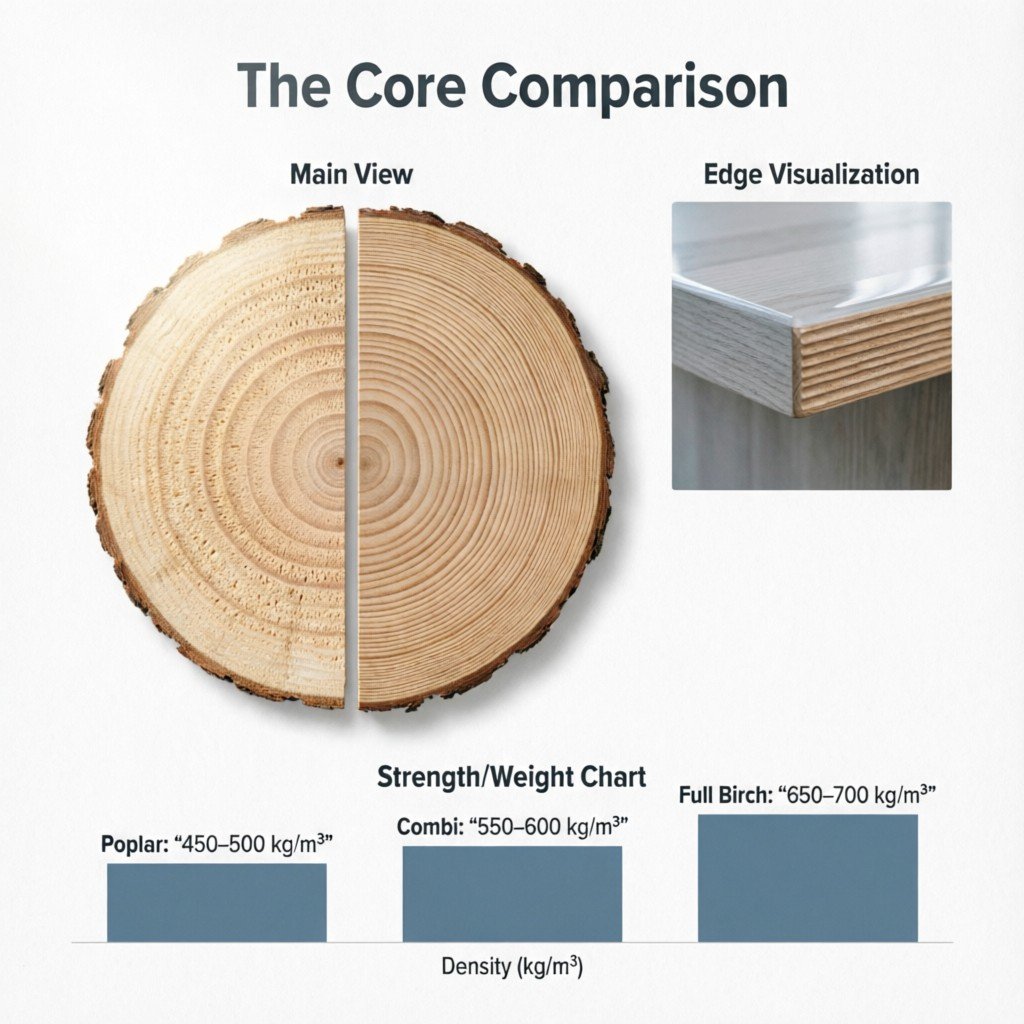
When your shipment arrives, check the edges. A true Marine Grade panel will show a perfectly solid, tight cross-section with no visible holes or overlaps in the core layers. If you see gaps, it is not BS 1088.
Image Attachment