Mastering Curved Surfaces: The Professional Guide to Flexible Plywood
In the realm of lumber wood products, achieving seamless curved surfaces has traditionally been a complex challenge requiring steam bending or laminating solid stock. However, modern architectural design demands fluidity and organic forms.
Flexible plywood has emerged as the industry standard for meeting these aesthetic demands without compromising structural integrity. For architects, builders, and designers, understanding this material is key to unlocking new creative possibilities.
Understanding Flexible Plywood Construction
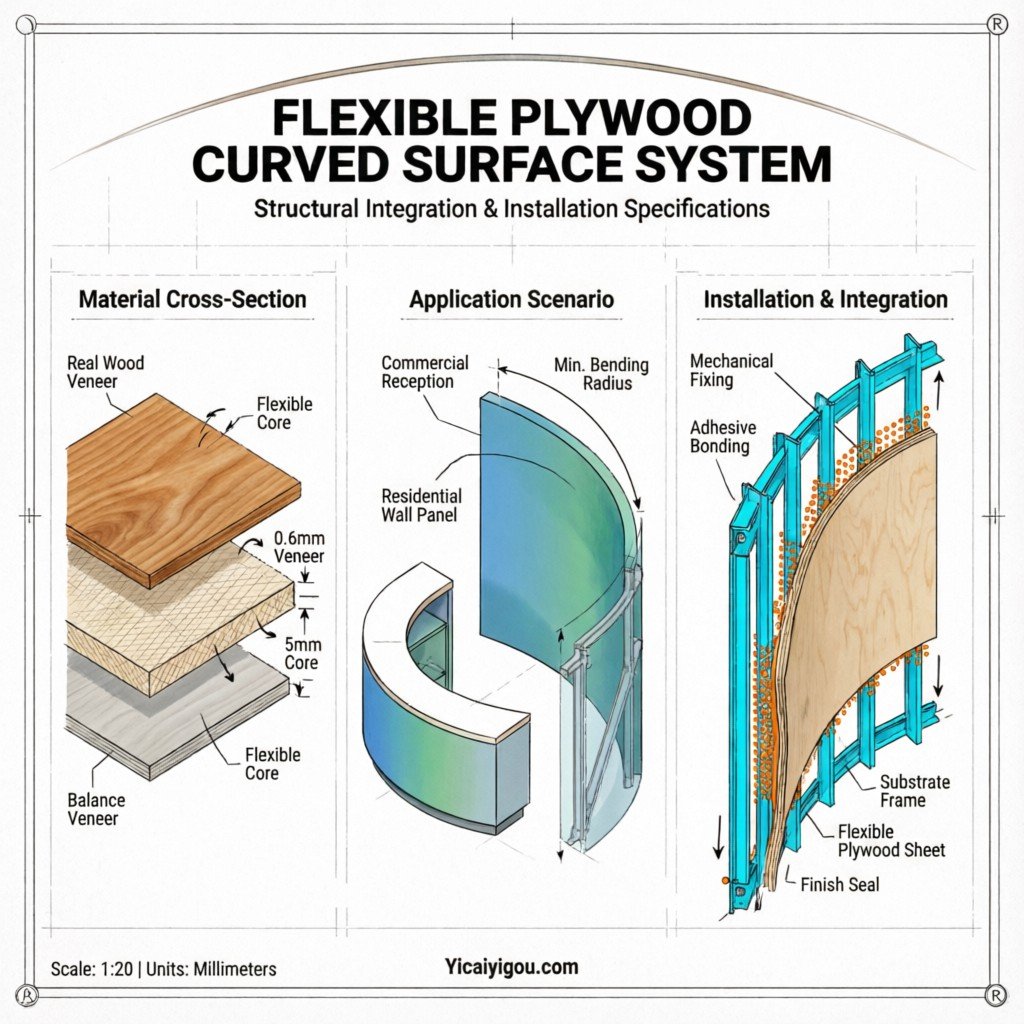
Flexible plywood, often referred to as bendable plywood, is engineered specifically for radius applications. Unlike standard plywood, it is constructed with thin veneer layers and a specialized cross-banding technique. The core typically consists of multiple thin plies bonded with flexible adhesives that allow the sheet to bend without cracking or delaminating.
Most commonly available in 1/4-inch thickness, high-quality flexible plywood can achieve a cold bend radius as tight as 12 inches without pre-soaking. This engineering eliminates the need for expensive steam boxes or kerfing techniques, significantly reducing labor costs and project timelines.
Applications in Architectural Woodwork
The versatility of flexible plywood makes it indispensable across various sectors. In commercial retail spaces, it is frequently used to create eye-catching display fixtures and reception desks that guide customer flow through organic shapes. In hospitality design, it forms curved wall paneling and ceiling features that add warmth and sophistication.
Furthermore, the furniture industry relies on this material for chair backs, rounded cabinetry, and custom millwork. Because it accepts standard wood veneers and laminates, it integrates seamlessly with existing design schemes. The stability of the engineered core also ensures resistance to warping, a common issue when attempting to curve solid lumber.
Technical Insights for Installation
Successful implementation requires adherence to specific technical guidelines. When working with curved wood surfaces, the substrate is critical. Flexible plywood should always be glued to a solid framework or substrate to maintain its shape permanently. Using contact cement or wood glue with proper clamping pressure ensures a bond that lasts the lifetime of the installation.
Professionals must respect the minimum bend radius specified by the manufacturer. Forcing the material beyond its limit can cause surface checking or core failure. Additionally, grain direction matters; bending across the grain is generally easier than with the grain. For double-curved surfaces (compound curves), specialized scoring or thinner gauges may be required. Always acclimate the material to the job site’s humidity levels for 48 hours before installation to prevent expansion issues later.
Conclusion and Next Steps
Flexible plywood represents the intersection of engineering precision and artistic freedom in the lumber wood products industry. It allows professionals to execute complex designs efficiently while maintaining the natural beauty of wood. By leveraging this material, you can elevate project specifications and deliver standout results for your clients.
Ready to integrate curved solutions into your next project? Contact our supply team today to request samples and technical data sheets. Let us help you bend the rules of traditional woodwork.