Future-Proofing Interiors: Decorative Melamine Boards Trends in Texture and Durability for 2026
The interior fit-out landscape is undergoing a significant transformation. As we approach 2026, the demand for materials that balance aesthetic sophistication with rigorous performance standards is higher than ever. At the forefront of this shift are Decorative Melamine Boards.
Once viewed primarily as a cost-effective alternative to solid wood, melamine-faced chipboard (MFC) has evolved into a premium surfacing solution capable of meeting the exacting demands of modern architecture and design.
For industry professionals, distributors, and specifiers, understanding the trajectory of surface texture and durability is critical for inventory planning and project specification. This article explores the technical advancements and market trends defining Decorative Melamine Boards in 2026, ensuring your projects remain competitive, compliant, and visually stunning.
The Tactile Revolution: Advanced Surface Textures
In 2026, visual fidelity is no longer sufficient; the tactile experience is paramount. The industry is moving away from generic wood grain prints toward hyper-realistic textures that mimic the physical feel of the material being represented.
Synchronized Pore Technology
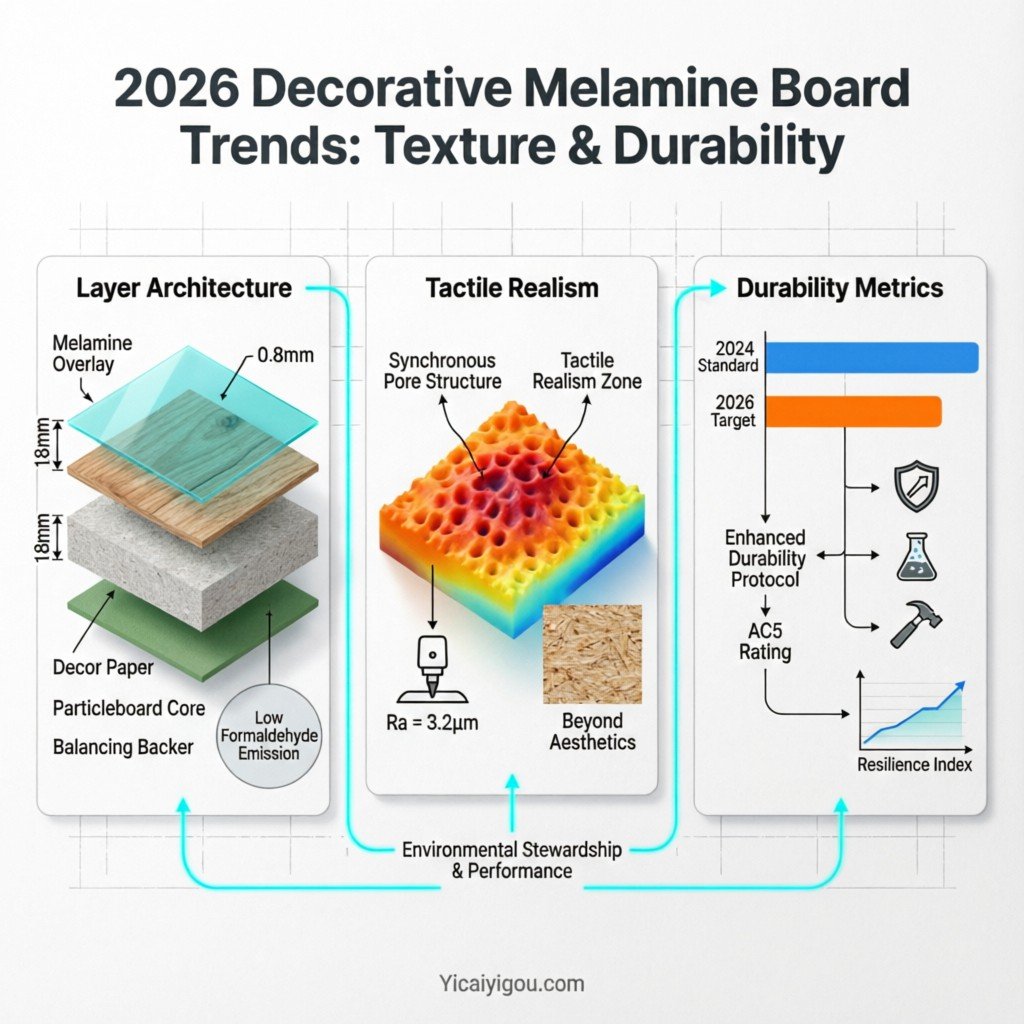
The leading trend in surface finishing is In-Register Embossing (IRE), often referred to as Synchronized Pore Technology. This technique aligns the embossed texture of the melamine overlay precisely with the printed design layer. For example, the groove of a wood grain print physically depresses into the board, creating a authentic tactile response. By 2026, advancements in pressing technology will allow for deeper, more varied pore structures without compromising the integrity of the overlay.
Beyond Wood: Concrete, Fabric, and Metal
While wood grains remain a staple, the versatility of Decorative Melamine Boards is expanding into abstract and industrial textures. Designers are increasingly specifying melamine surfaces that replicate raw concrete, woven fabrics, and brushed metals. These textures serve a dual purpose: they provide unique aesthetic value and often offer improved hygiene profiles by reducing visible fingerprinting and smudging in high-traffic commercial environments. Data from recent interior design surveys indicates a 15% year-over-year increase in specifications for non-wood textures in hospitality and office sectors.
Durability Standards: Engineering for Longevity
Durability remains the primary technical consideration for Decorative Melamine Boards. As lifecycle costing becomes a standard part of project bidding, the longevity of the surface directly impacts the bottom line.
Abrasion and Impact Resistance
The European Norm (EN438) classification system continues to be the benchmark for durability. However, 2026 standards are pushing for higher performance in residential applications. While AC3 was traditionally sufficient for home use, there is a shift toward AC4 ratings for residential kitchens and high-use living areas. This is achieved through enhanced overlay papers infused with aluminum oxide and specialized corundum particles.
Technical testing using the Taber Abraser shows that next-generation melamine overlays are achieving over 4,000 revolutions before wear-through, a significant increase from the 2,500 revolutions standard five years ago. This improvement reduces warranty claims and enhances customer satisfaction.
Chemical and Stain Resistance
In healthcare and educational facilities, resistance to harsh cleaning agents is non-negotiable. Modern melamine resins are being formulated to withstand prolonged exposure to disinfectants, solvents, and acidic substances without delaminating or discoloring. For industry professionals, specifying boards with enhanced chemical resistance ensures compliance with health safety regulations while maintaining aesthetic integrity over time.
Sustainability and Core Material Innovation
The lumber and wood products industry is under increasing pressure to reduce carbon footprints. Decorative Melamine Boards are responding with significant innovations in core materials and adhesive technologies.
Low-Emitting Materials
Regulatory compliance regarding formaldehyde emissions is stricter than ever. By 2026, the standard for premium melamine boards will be CARB Phase 2 compliant and E0 (near-zero formaldehyde) certified. Manufacturers are transitioning to No Added Urea Formaldehyde (NAUF) resins. This shift is not merely regulatory; it is a market demand. LEED v4.1 and WELL Building Standard certifications often require low-emitting materials, making NAUF melamine boards a prerequisite for green building projects.
Recycled and FSC-Certified Cores
Sustainability extends to the substrate. There is a growing trend toward using chipboard cores derived from post-industrial recycled wood waste. Furthermore, Forest Stewardship Council (FSC) certification is becoming a baseline expectation rather than a premium add-on. Distributors stocking Decorative Melamine Boards with verified chain-of-custody certifications will find themselves preferred vendors for large-scale commercial developments.
Application Versatility in 2026
The versatility of melamine allows it to penetrate market segments previously dominated by High-Pressure Laminate (HPL) or solid wood.
- Commercial Office: Modular workstations and cabinetry utilize thin-profile melamine for cost efficiency without sacrificing durability.
- Healthcare: Antimicrobial melamine surfaces are gaining traction, incorporating silver-ion technology into the overlay to inhibit bacterial growth.
- Retail Fixtures: The ability to customize colors and textures rapidly makes melamine ideal for pop-up stores and seasonal retail displays where turnover is high.
Conclusion
The trajectory for Decorative Melamine Boards in 2026 is clear: higher fidelity textures, superior durability ratings, and uncompromising sustainability. For lumber industry professionals, staying ahead of these trends means stocking products that offer synchronized pore technologies, AC4+ durability ratings, and E0 emissions certifications. For designers and contractors, these advancements mean delivering spaces that are beautiful, resilient, and environmentally responsible.
The gap between budget surfacing and premium materials is closing. Melamine is no longer just an alternative; it is a primary choice for forward-thinking projects.
Ready to Upgrade Your Inventory?
Don’t let your product line fall behind the 2026 curve. Partner with a supplier who understands the technical nuances of modern surfacing. Contact us today to request samples of our latest high-durability, textured melamine collection. Let’s build the future of interior design together.