Unlocking Luxury: UV-Coated Plywood as the Secret to High-End Interior Finishes
In the competitive landscape of architectural design and luxury construction, the distinction between a standard project and a masterpiece often lies in the details. Specifically, the quality of surface materials defines the tactile and visual experience of a space.
For industry professionals and discerning clients alike, UV-coated plywood has emerged as the definitive solution for achieving high-end interior finishes that marry aesthetic elegance with uncompromising durability.
As the demand for sustainable, low-maintenance, and visually striking wood products grows, understanding the technical advantages of UV-curing technology is essential for architects, interior designers, and contractors. This article explores why UV-coated plywood is becoming the substrate of choice for premium environments.
Understanding UV-Curing Technology
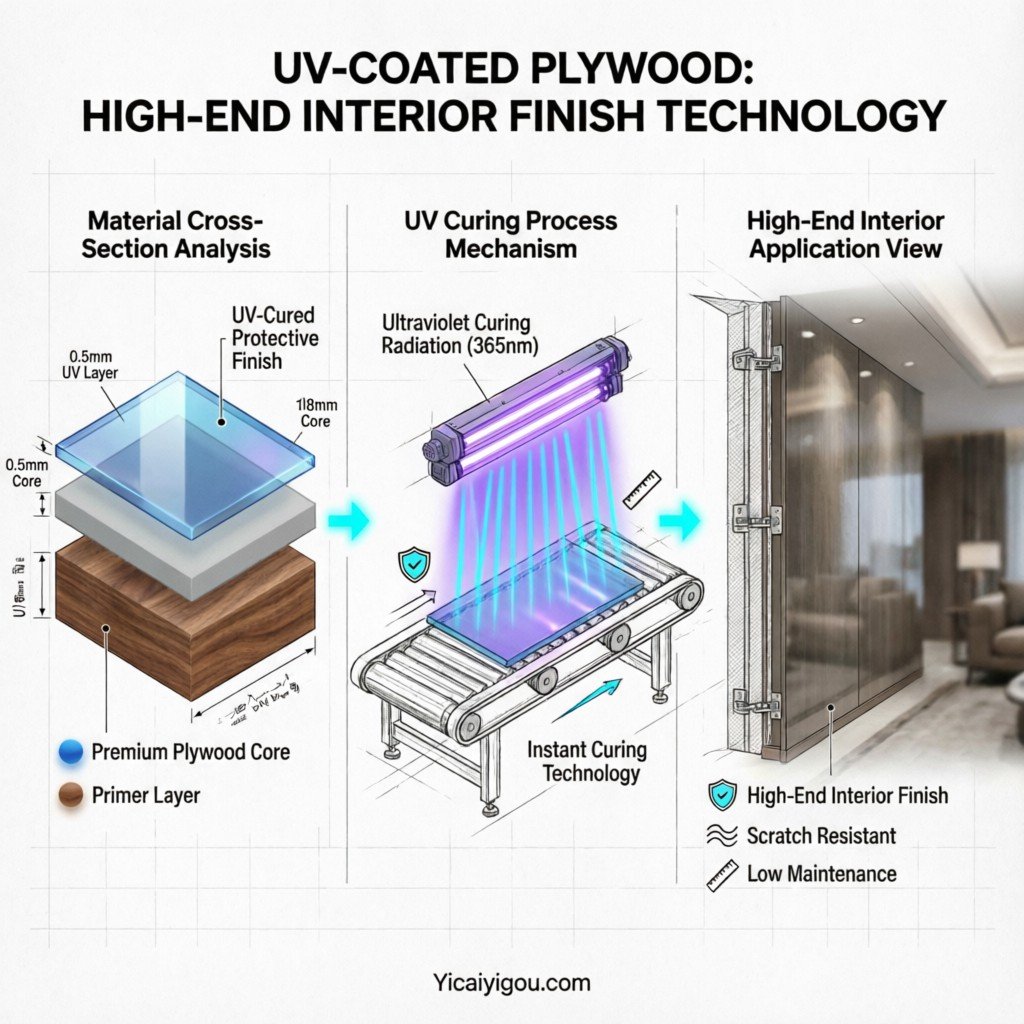
To appreciate the value of UV-coated plywood, one must first understand the manufacturing process. Unlike traditional finishing methods that rely on air-drying solvents or oil-based lacquers, UV coating utilizes ultraviolet light to instantly polymerize and harden the finish.
When a liquid UV coating is applied to the architectural plywood surface, it is immediately exposed to high-intensity UV lamps. This exposure triggers a photochemical reaction that cures the coating in seconds rather than hours or days.
The result is a cross-linked polymer matrix that bonds exceptionally well to the wood veneer or substrate. This process eliminates the risk of dust settlement during drying and ensures a consistent film thickness, which is critical for maintaining the integrity of durable wood surfaces in high-traffic areas.
Superior Durability and Performance Metrics
In high-end residential and hospitality projects, surfaces must withstand significant wear while retaining their original luster. Traditional finishes often succumb to scratching, yellowing, or chemical damage over time. UV-coated plywood, however, sets a new benchmark for performance.
Industry testing indicates that UV-cured finishes offer superior abrasion resistance compared to conventional catalyzed lacquers. Depending on the specific formulation, these surfaces can withstand thousands of cycles on a Taber abrasion tester without significant wear. Furthermore, the cross-linked structure provides exceptional resistance to solvents, acids, and alkalis, making it ideal for environments like luxury kitchens, hotel lobbies, and corporate offices where spills and cleaning chemicals are common.
Another critical performance metric is color stability. UV coatings are engineered to resist UV radiation from sunlight, preventing the ambering or yellowing often associated with oil-based finishes. This ensures that the natural beauty of the wood grain remains true for decades, preserving the asset value of the interior fit-out.
Aesthetic Versatility for Modern Design
The notion that durability comes at the expense of aesthetics is a misconception debunked by modern UV curing technology. Today’s manufacturing capabilities allow for a wide spectrum of sheen levels, ranging from ultra-matte to high-gloss, without sacrificing protection.
For designers seeking interior design trends that emphasize natural textures, UV coatings can be applied in thin films that enhance the wood grain rather than obscuring it. This “open pore” finish maintains the tactile warmth of natural wood while providing a protective shield. Additionally, digital printing technologies can be combined with UV coating to create custom patterns, metallic effects, or synchronized embossing that mimics the texture of the wood grain perfectly. This versatility allows wood paneling to be used not just as a structural element, but as a primary design feature in feature walls, ceilings, and custom joinery.
Sustainability and Environmental Compliance
Sustainability is no longer optional in the lumber and wood products industry; it is a requirement. Green building certifications such as LEED and BREEAM demand materials with low environmental impact. UV-coated plywood excels in this category due to the nature of the curing process.
Because UV coatings are 100% solid formulations, they contain no solvents that evaporate into the atmosphere. This results in negligible Volatile Organic Compound (VOC) emissions during both manufacturing and installation. For indoor air quality, this is a significant advantage. Furthermore, the efficiency of the UV curing process reduces energy consumption compared to thermal drying ovens used in traditional finishing. By selecting sustainable wood products with UV finishes, professionals can contribute to healthier indoor environments while meeting strict regulatory compliance standards.
Practical Applications in High-End Projects
The application of UV-coated plywood spans various sectors within the construction industry. In luxury residential developments, it is frequently used for cabinetry, built-in shelving, and wall cladding where a flawless finish is expected. The scratch resistance ensures that high-touch areas remain pristine despite daily use.
In the hospitality sector, durability is paramount. Hotel corridors, reception desks, and restaurant partitions benefit from the impact resistance of UV-cured surfaces. The ability to clean these surfaces with strong disinfectants without degrading the finish became particularly valuable in the post-pandemic landscape, where hygiene protocols are stringent.
Commercial offices also leverage this material for conference rooms and executive suites. The professional appearance of a uniform, high-quality wood finish conveys stability and prestige, while the low maintenance requirements reduce long-term facility management costs.
Installation and Maintenance Insights
For contractors, working with UV-coated plywood offers logistical advantages. Since the finish is fully cured at the factory, there is no need for on-site sanding or finishing. This reduces installation time, minimizes on-site waste, and eliminates the exposure of workers to finishing chemicals.
Maintenance is equally straightforward. The non-porous nature of the cured surface prevents dirt and grime from penetrating the wood. Routine cleaning requires only a damp cloth and mild detergent. Avoiding abrasive cleaners is recommended to preserve the sheen, but the inherent hardness of the coating makes it forgiving compared to oil-finished counterparts.
Conclusion: Elevating Standards with Technology
The integration of UV-coated plywood into modern construction represents a convergence of artistry and engineering. It solves the age-old dilemma of choosing between beauty and longevity. For industry professionals, specifying this material demonstrates a commitment to quality and innovation. For clients, it offers peace of mind knowing their investment is protected by state-of-the-art surface technology.
As the industry continues to evolve, the demand for materials that offer performance, sustainability, and aesthetic flexibility will only increase. UV-coated plywood stands ready to meet these demands, proving itself as the secret weapon for achieving truly high-end interior finishes.
Ready to Transform Your Projects?
Discover the difference that premium UV-coated plywood can make in your next project. Whether you are designing a luxury residence or outfitting a commercial space, our range of architectural wood products is engineered to exceed expectations. Contact our sales team today to request samples, view technical data sheets, and discuss how we can support your design vision with superior materials.