The Silent Revolution in Modern Home Furnishing
Did you know that over 60% of the desks currently used in home offices worldwide are Ready-to-Assemble (RTA) units constructed primarily from engineered wood? While consumers often dream of solid oak or mahogany, the reality of modern logistics and affordability points decisively toward particleboard. This material is the backbone of the flat-pack furniture industry, offering stability and cost-efficiency that solid stock cannot match.
For global brands, the question is no longer whether to use engineered panels, but where to source them. China has emerged as the epicenter of this production, transforming raw timber into high-performance wood products that ship globally. Understanding why requires a deep dive into manufacturing capabilities, material science, and supply chain economics.
Navigating the Middle Kingdom’s Manufacturing Ecosystem
China’s dominance in the furniture component sector is not accidental; it is the result of decades of infrastructure investment and specialized industrial zoning. When global buyers look for particleboard, they are not just buying a sheet of compressed wood; they are buying into a highly optimized ecosystem.
The Timber Supply Network
The foundation of any quality board lies in the raw material. Chinese manufacturers have secured vast supply chains for poplar, eucalyptus, and mixed hardwood residuals. Unlike traditional lumber milling, which requires large, defect-free logs, particleboard production utilizes wood chips and shavings. This allows manufacturers to maximize yield from every tree harvested. In regions like Shandong and Guangdong, mills are situated near ports, reducing inland transportation costs significantly. This proximity ensures that the transition from raw timber to finished panel happens with minimal friction, keeping lead times competitive against European or North American suppliers.
Scale and Customization
Global brands often require specific dimensions, densities, and veneer finishes. Chinese factories are equipped to handle massive volume orders while maintaining flexibility. Whether a retailer needs standard 4×8 sheets or oversized panels for commercial shelving, the production lines are adaptable. This scalability is crucial for RTA furniture, where consistency across thousands of units is mandatory for hardware fitting and assembly instructions.
Engineered Efficiency Versus Traditional Lumber Costs
One of the primary drivers for sourcing particleboard from China is the cost-performance ratio compared to solid lumber. While hardwood offers aesthetic prestige, it is prone to expansion and contraction with humidity changes. Particleboard, when manufactured correctly, offers superior dimensional stability.
Density and Bonding Strength
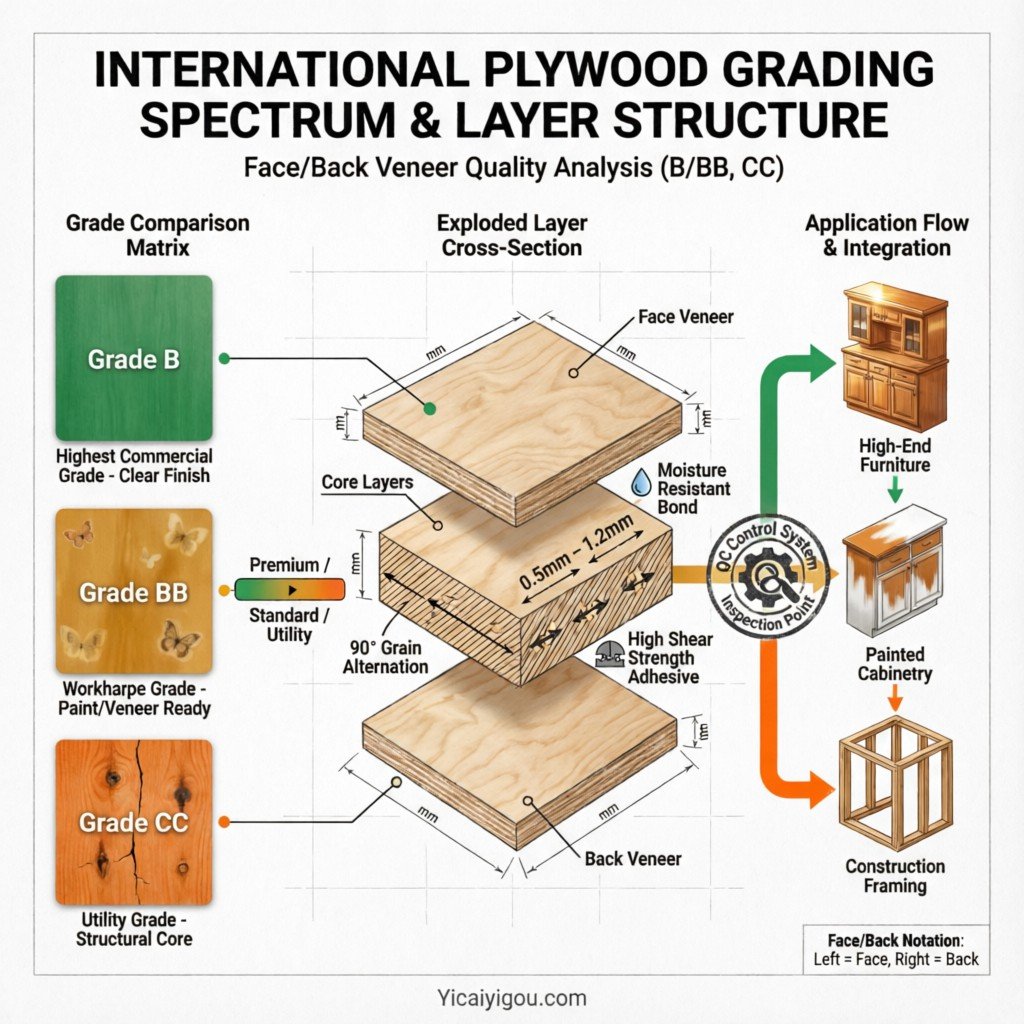
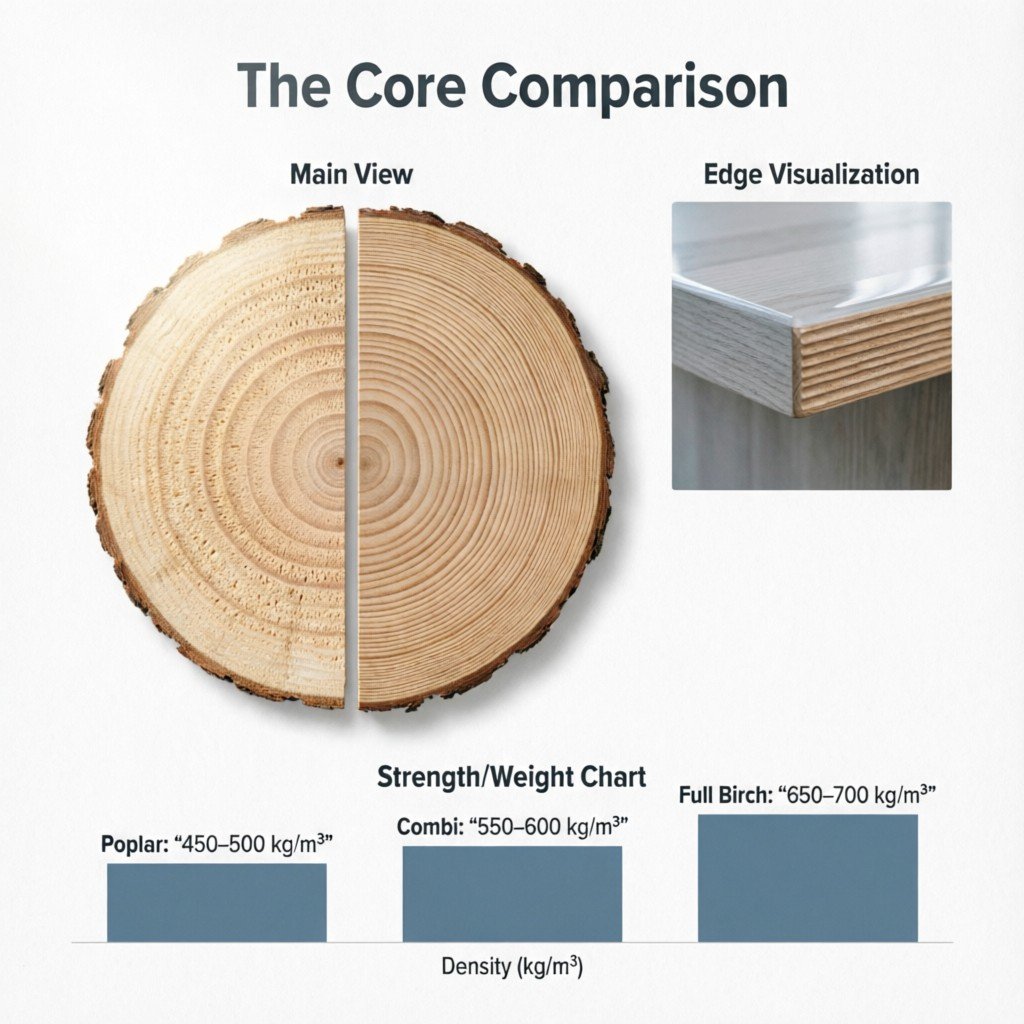
High-quality particleboard is defined by its density, typically ranging between 650 to 750 kg/m³. Chinese manufacturers utilize advanced pressing technology to ensure uniform density throughout the panel. This is critical for screw holding capacity, a common failure point in RTA furniture. When compared to plywood, which uses layered veneers, particleboard provides a smoother substrate for laminates and melamine finishes. This smoothness reduces the need for extensive surface filling, lowering production costs for the final furniture assembler. Furthermore, while plywood is excellent for structural framing, particleboard remains the king of cabinet boxes and shelving where flat surfaces are prioritized over bending strength.
The Economics of Waste
Using solid lumber for RTA furniture generates significant waste due to cutting around knots and grain irregularities. Particleboard production utilizes nearly 100% of the wood fiber input. For brands calculating carbon footprints and material costs, this efficiency translates directly to the bottom line. Sourcing from China amplifies these savings due to lower labor costs and energy efficiencies in large-scale industrial plants.
Compliance, Carbon, and the Quest for Clean Air
Historically, concerns about formaldehyde emissions plagued the reputation of imported engineered wood products. However, the landscape has shifted dramatically. Top-tier Chinese manufacturers now adhere to strict international standards, often exceeding the requirements of their Western counterparts.
E0 and CARB Phase 2 Standards
Leading suppliers now produce boards compliant with CARB Phase 2 (California Air Resources Board) and European E0 standards. This means the urea-formaldehyde resin used to bind the wood chips emits negligible volatile organic compounds (VOCs). For global brands, this compliance is non-negotiable. It ensures that furniture sold in North America and Europe meets rigorous health and safety regulations. Yicaiyigou works exclusively with suppliers who provide third-party testing certificates, ensuring that every shipment meets these environmental benchmarks.
Sustainability Certifications
Beyond emissions, sustainable sourcing is a priority. Many Chinese mills are now obtaining FSC (Forest Stewardship Council) certification, verifying that the timber used comes from responsibly managed forests. This allows global brands to market their RTA furniture as eco-friendly, appealing to the growing segment of conscious consumers who prioritize sustainability without sacrificing affordability.
Securing Your Supply Chain with Yicaiyigou
Sourcing particleboard from China offers immense advantages, but it requires navigational expertise. Language barriers, quality verification, and logistics can become bottlenecks for unprepared buyers. This is where industry specialists like Yicaiyigou become indispensable.
Vetted Supplier Networks
Yicaiyigou maintains a curated network of manufacturers specializing in high-grade wood products. We do not simply connect buyers to factories; we verify production capabilities, quality control processes, and export compliance. This reduces the risk of receiving substandard panels that could compromise the structural integrity of your furniture.
Streamlined Logistics
From the factory floor in Shandong to the warehouse in Los Angeles, the journey involves complex documentation and freight coordination. Yicaiyigou manages these intricacies, ensuring that your lumber and engineered wood products arrive on schedule. By leveraging established relationships with freight forwarders and customs brokers, we minimize delays and unexpected costs.
Technical Consultation
Choosing between particleboard, plywood, or MDF depends on the specific application. Our team provides technical consultation to help brands select the right material specification for their RTA designs. Whether you need moisture-resistant boards for kitchen units or high-density panels for load-bearing shelves, we ensure the material matches the engineering requirements.
The shift toward RTA furniture is permanent, and particleboard is the engine driving this market. By sourcing from China through a trusted partner, global brands can leverage cost efficiencies, technical precision, and scalable production. With Yicaiyigou, you gain more than a supplier; you gain a strategic ally in the competitive world of modern furniture manufacturing.