The High Cost of a Single Moisture Spike
Did you know that nearly 12% of international timber shipments face rejection or claims due to preventable quality control errors? For a company like Yicaiyigou, reputation isn’t just built on sales; it is forged in the details of every container that leaves the dock. When you are shipping lumber across oceans, the margin for error is non-existent.
A single container of warped wood products can halt a construction project, damage client relationships, and result in significant financial loss. Quality control isn’t a box-ticking exercise; it is the backbone of reliable supply chains. Before your cargo hits the high seas, rigorous verification ensures that premium timber arrives in the same condition it left the factory.
Verifying Material Integrity Before Stacking
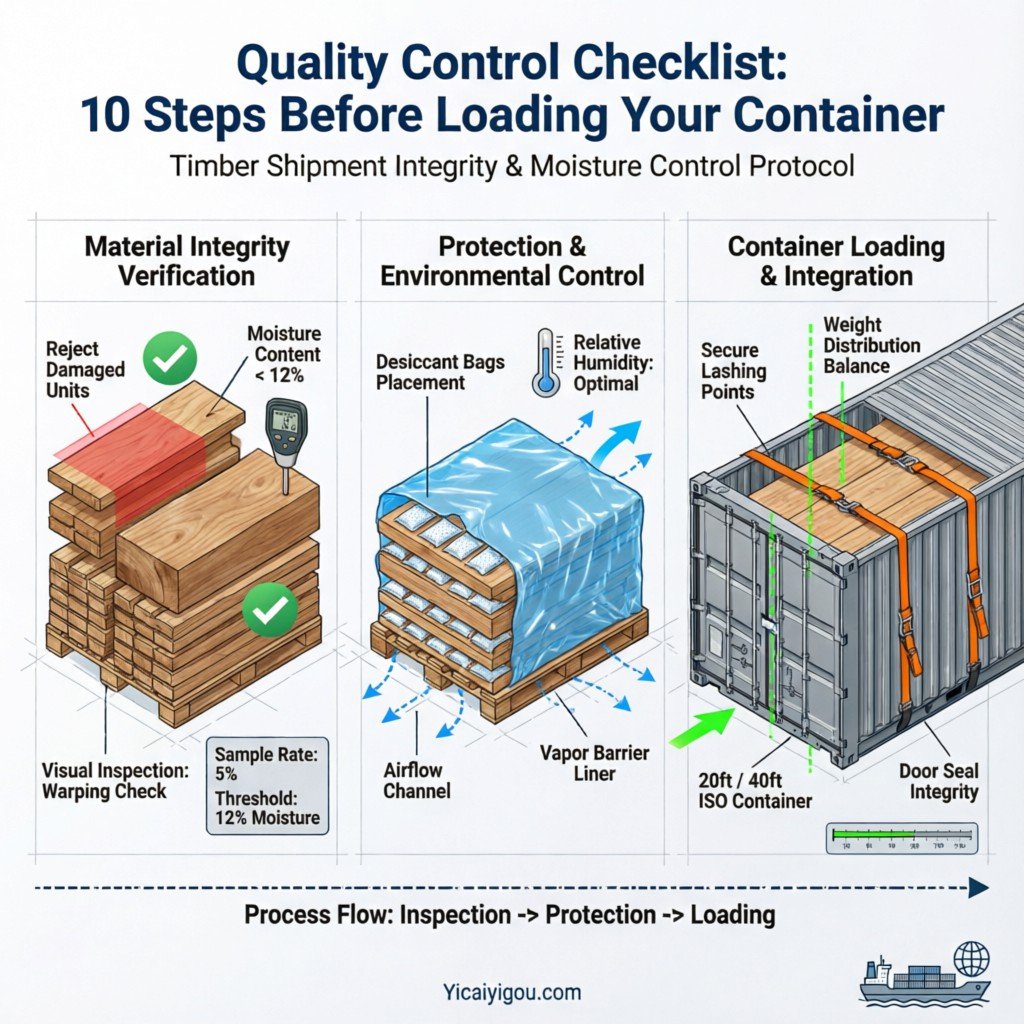
The foundation of a successful shipment lies in the material itself. If the lumber is compromised before it enters the container, no amount of careful loading will save it. We focus on three critical verification steps during this phase.
Moisture Content Verification
Wood is hygroscopic, meaning it absorbs and releases moisture based on its environment. Shipping hardwood with a moisture content (MC) above 15% into a humid container is a recipe for disaster. As the container heats up during transit, trapped moisture turns to vapor, leading to mold growth or significant warping. At Yicaiyigou, we use pin-type moisture meters to sample multiple boards across the batch. The target MC is typically between 12% and 14% for most export-grade wood products. If the reading spikes, the material is sent back to the kiln. Ignoring this step is the fastest way to receive a claim for ruined inventory upon arrival.
Dimensional Accuracy and Grading
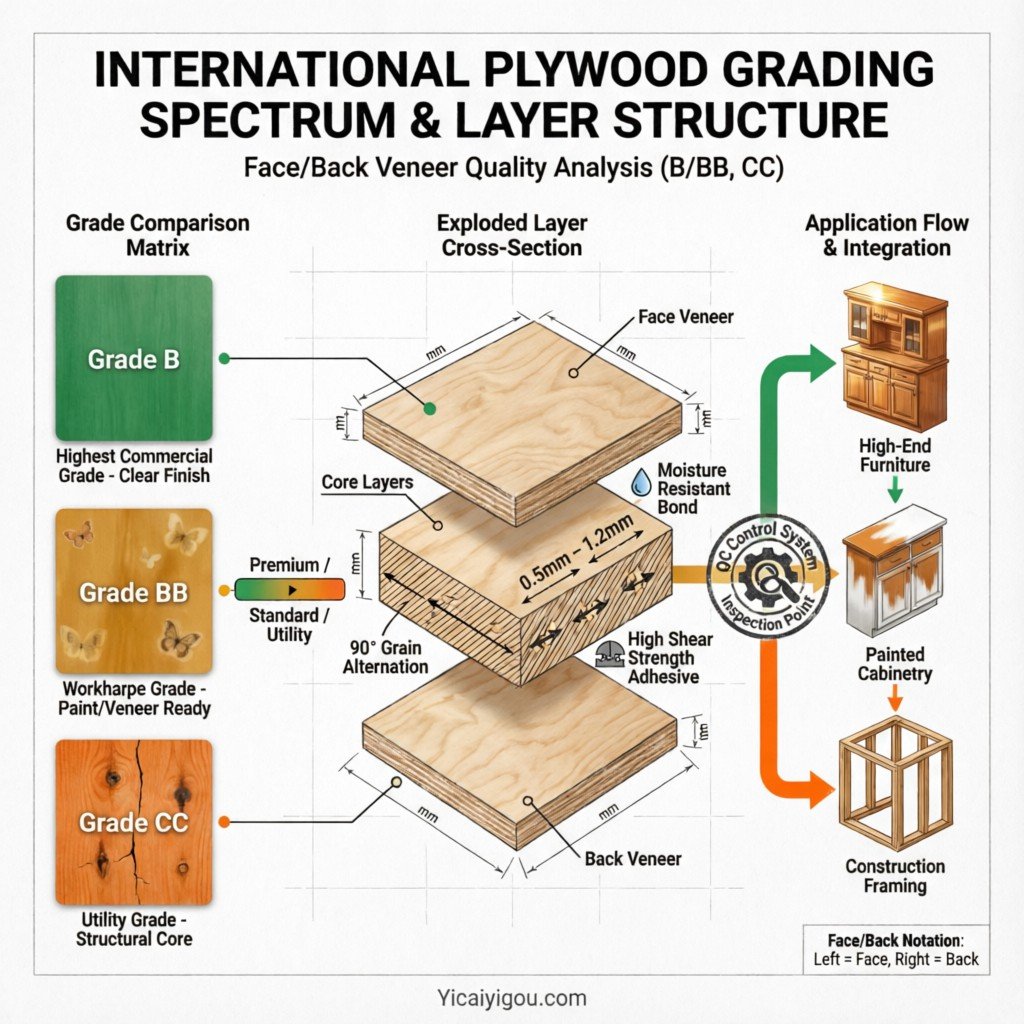
Consistency is key when clients are machining plywood or cutting timber for specific joinery. We randomly select pieces from different layers of the stack to verify thickness, width, and length against the purchase order. A variance of even 2mm can cause issues in automated production lines. Furthermore, surface grading must match the contract specifications. Whether it is clear grade hardwood or construction-grade lumber, knots, splits, or wane must be within acceptable limits. We inspect both faces and edges, ensuring that the visual quality matches the technical grade stamped on the bundle.
Structural Integrity Testing
Beyond surface appearance, the internal strength of the timber matters. For structural wood products, we check for internal checks or honeycombing that might not be visible externally. This is particularly crucial for load-bearing lumber. We perform drop tests on sample bundles to ensure the stacking strength can withstand the weight of containers stacked three-high on a vessel. If the lower bundles crush, the entire shipment shifts, leading to damaged corners and unsafe unloading conditions at the destination port.
Engineering Protection During the Loading Process
Once the material passes inspection, the physical loading process begins. This is where logistics meet physics. Proper configuration prevents movement, friction, and environmental damage during the weeks spent at sea.
Proper Stacking Configuration
How you stack plywood sheets versus rough lumber makes a significant difference. Sheets must be stacked flat on a level surface to prevent bowing. Long timber pieces require uniform support along their length to avoid sagging. We ensure that bundles are aligned perfectly within the container width to maximize space without creating pressure points against the container walls. Misaligned stacks can shift during rough seas, causing the doors to bulge or become impossible to open upon arrival.
Dunnage and Spacer Placement
Never let wood products touch the container floor directly. We use ISPM 15 compliant dunnage to elevate the cargo. This allows forklift tines to slide underneath safely and promotes air circulation beneath the lumber. Spacers are placed between layers of hardwood to prevent friction marks and allow fumigation gases to circulate if required. The dunnage must be dry and free of pests to comply with international phytosanitary standards. Wet dunnage is a common source of contamination that can lead to quarantine holds at customs.
Weather-Proof Wrapping and Ventilation
Even inside a steel box, condensation is a threat. We wrap bundles of sensitive wood products in high-grade plastic sheeting to create a barrier against container rain. However, sealing everything tightly can trap humidity. We balance this by ensuring proper ventilation within the container. Desiccant bags are hung from the ceiling hooks to absorb excess moisture during temperature fluctuations. For plywood shipments, edge sealing is critical to prevent water ingress from the sides, which can delaminate the layers regardless of how dry the core remains.
Container Floor and Wall Inspection
Before loading begins, the container itself undergoes a inspection. We check the floor for protruding nails or oil stains that could stain premium lumber. The walls are checked for holes that could let in seawater. A “wind and water tight” certificate is standard, but visual confirmation is necessary. If the container floor is wet, it will wick moisture into the timber stacks immediately. We refuse any container that shows signs of previous chemical spills or structural weakness, as the safety of the hardwood cargo is paramount.
Final Documentation and Sign-Off Protocols
The physical loading is only half the battle. The paperwork and evidence gathered during loading protect both Yicaiyigou and the client in case of disputes.
Photographic Evidence Capture
We treat every container load as a documented event. Photos are taken of the empty container, the dunnage placement, the mid-loading stage, and the fully loaded doors. Close-up shots of the lumber grading stamps and moisture meter readings are included. This visual log provides irrefutable proof of the condition of the wood products at the time of shipment. If a claim arises regarding damage, these photos distinguish between transit damage and pre-existing conditions.
Final Documentation Review
All shipping documents must match the physical cargo exactly. The bill of lading, commercial invoice, and packing list are cross-referenced with the loaded count. Discrepancies in the volume of timber or the count of plywood bundles can cause customs delays. We verify the HS codes specifically for hardwood versus softwood to ensure correct tariff application. Accuracy here prevents costly hold-ups at the destination port.
Securing Your Reputation with Every Shipment
Quality control is the silent partner in every successful transaction. By adhering to these ten steps, Yicaiyigou ensures that every piece of lumber arrives ready for use. It is about more than just following a checklist; it is about understanding the nuances of wood products and respecting the journey they undertake. When you prioritize rigorous verification, you aren’t just shipping timber; you are delivering trust.
Image Attachment