Mastering Concrete Formwork: A Comprehensive Guide to Film Faced Plywood Overlays
In the high-stakes world of commercial construction, the quality of the finished concrete structure is often determined before the first pour ever takes place. The secret lies in the formwork system, and specifically, the panels used to mold the concrete. Among the various materials available,
Film Faced Plywood has emerged as the industry standard for professional concrete formwork. Choosing the right overlay is not merely a procurement decision; it is a strategic choice that impacts project timelines, surface finish quality, and overall budget efficiency.
For industry professionals, understanding the technical nuances of formwork panels is essential. This guide explores the critical factors involved in selecting the right film faced plywood, ensuring optimal performance in demanding construction environments.
Understanding the Phenolic Overlay
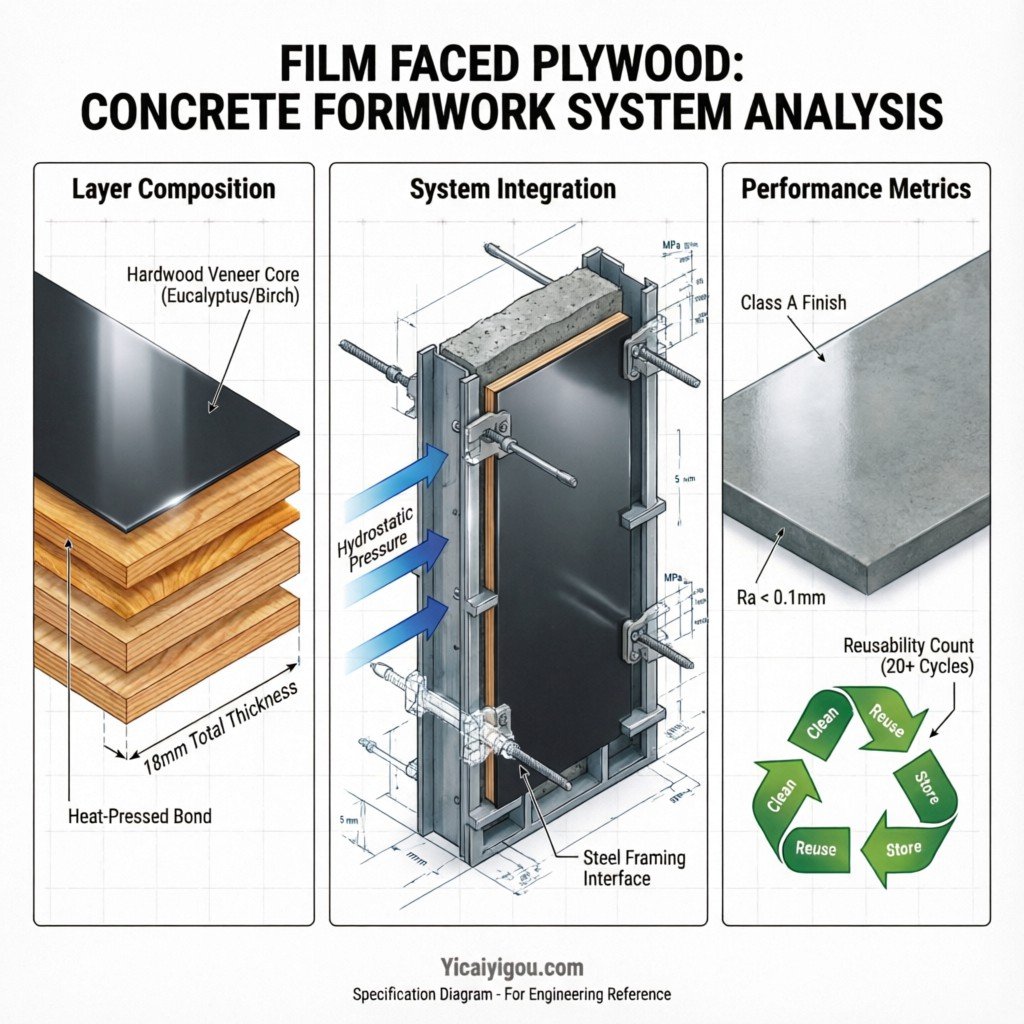
At the heart of Film Faced Plywood is the phenolic resin film that coats both sides of the plywood substrate. This overlay is not simply a decorative layer; it is a high-performance engineering feature designed to withstand the harsh chemical and physical conditions of wet concrete.
The phenolic film creates a non-porous barrier that prevents water from the concrete mix from penetrating the wood core. This resistance is crucial for two reasons.
First, it prevents the plywood from swelling or delaminating during the curing process. Second, it ensures a smooth “mirror finish” on the concrete surface, reducing the need for costly post-pour remediation or plastering.
High-quality overlays are typically heated and pressed onto the substrate at high temperatures, ensuring a bond that resists peeling even after multiple uses.
Core Material and Structural Integrity
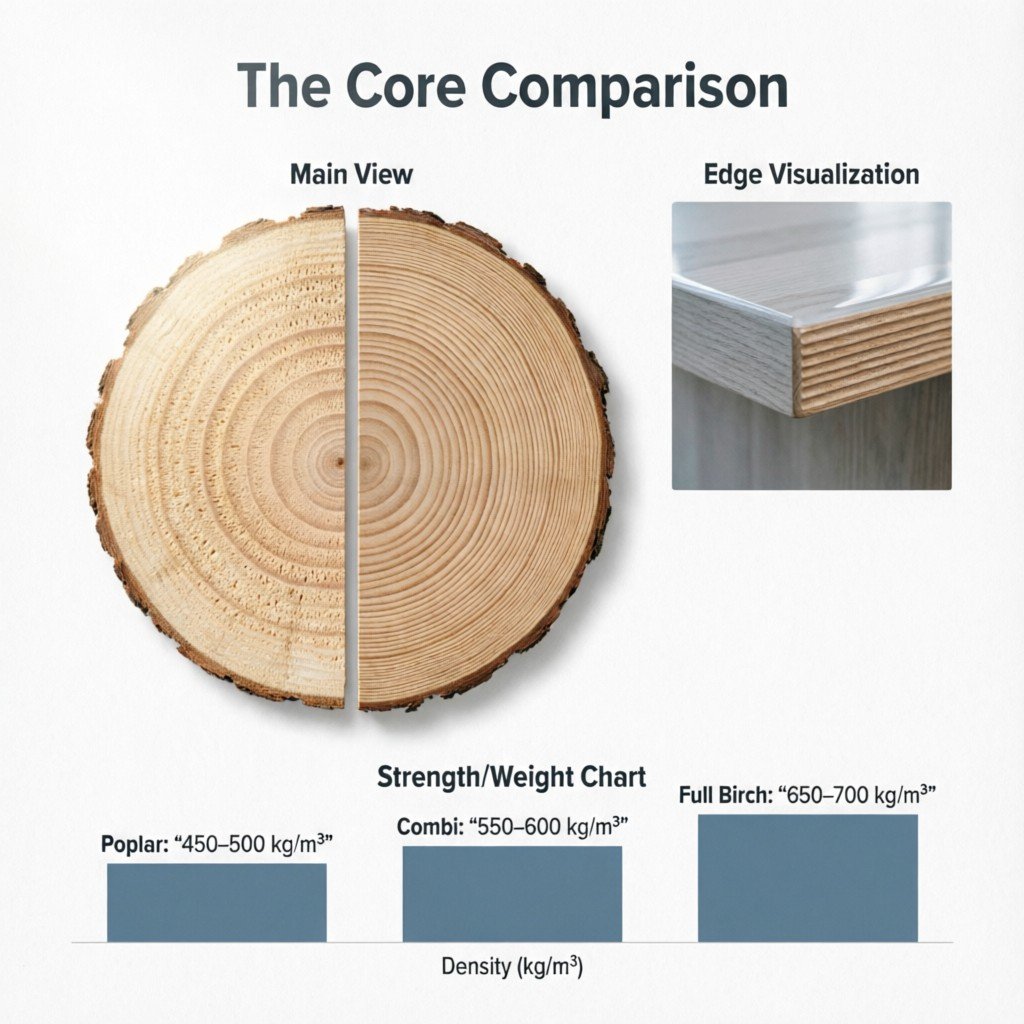
While the overlay protects the surface, the core determines the load-bearing capacity of the panel. In the lumber wood products industry, not all cores are created equal. The most common core materials include poplar, eucalyptus, birch, and combi (a mixture of hardwood and softwood).
- Poplar Core: Lightweight and cost-effective, suitable for vertical formwork where pressure loads are lower.
- Hardwood Core (Birch/Eucalyptus): Offers superior density and screw-holding capacity. These are essential for heavy-duty horizontal formwork, such as slabs and beams, where high pressure is exerted on the panels.
- Combi Core: Provides a balance between cost and strength, making it a versatile choice for general construction applications.
Selecting the appropriate core material in conjunction with the right overlay thickness ensures that the formwork panels maintain their structural integrity throughout the project lifecycle. A mismatched core can lead to panel failure, regardless of the quality of the phenolic film.
Brown Film vs. Black Film: Making the Choice
One of the most common questions procurement managers face is the choice between brown and black film. While both serve the same fundamental purpose, there are distinct differences in performance and application.
Brown Film Plywood is often the standard choice for general construction. It provides adequate water resistance and is typically more affordable. However, Black Film Plywood is generally manufactured with a higher density phenolic resin. The black overlay is thicker and more robust, offering superior resistance to abrasion, chemicals, and UV exposure.
Data from industry trials suggests that black film faced plywood can achieve significantly higher reuse cycles compared to brown film variants. In optimal conditions, high-grade black film panels can be reused 20 to 30 times, whereas standard brown film panels may last for 10 to 15 uses. For large-scale infrastructure projects where consistency and longevity are paramount, the investment in black film often yields a lower total cost of ownership.
Technical Specifications and Standards
Professional grade construction plywood must adhere to strict international standards to ensure safety and reliability. When specifying materials, look for certifications such as EN 636-3, which denotes plywood suitable for humid conditions, or BS 1088, the benchmark for marine-grade plywood.
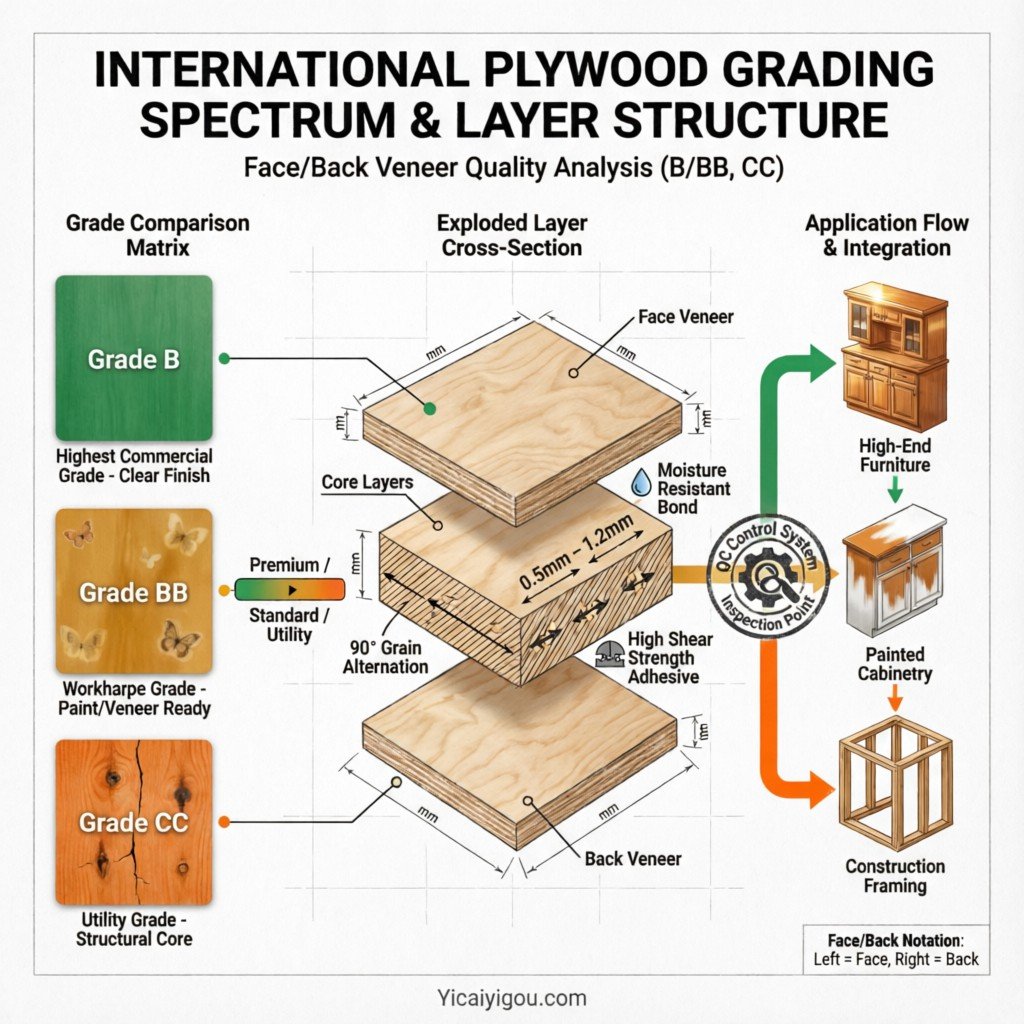
A critical component of these specifications is the adhesive used to bond the veneers. High-quality film faced plywood utilizes WBP (Weather and Boil Proof) glue. This phenolic glue line ensures that the layers of the plywood will not delaminate even when submerged in water or exposed to extreme temperature fluctuations. Without WBP glue, the structural integrity of the panel is compromised, posing safety risks on the job site.
Furthermore, thickness tolerance is a vital metric. Standard thicknesses range from 12mm to 21mm. A deviation of even half a millimeter can affect the alignment of formwork systems, leading to concrete leakage or uneven surfaces. Reliable suppliers provide guaranteed thickness tolerances to ensure seamless integration with aluminum or steel framing systems.
Economic Impact and Reuse Cycles
The initial purchase price of Film Faced Plywood is rarely the most significant cost factor over the life of a project. The true cost lies in the cost-per-pour. Buying cheaper, lower-quality panels that delaminate after three uses is far more expensive than investing in premium panels that withstand twenty pours.
To maximize economic efficiency, contractors should calculate the expected reuse cycles based on the project’s specific requirements. Factors influencing reuse include:
* Cleaning Protocols: Using appropriate cleaning agents that do not strip the phenolic layer.
* Storage Conditions: Keeping panels flat and covered when not in use to prevent warping.
* Edge Sealing: Applying sealant to cut edges to prevent water ingress into the core.
By implementing strict maintenance protocols, companies can extend the lifespan of their formwork inventory, reducing waste and improving sustainability metrics—a growing priority in modern construction.
Conclusion
Selecting the right Film Faced Plywood is a decision that bridges the gap between engineering requirements and financial prudence. The phenolic overlay serves as the first line of defense against the rigorous demands of concrete formwork, protecting the core and ensuring a pristine finish.
By understanding the differences in core materials, film colors, and technical standards like WBP glue, industry professionals can make informed choices that enhance project outcomes.
In an industry where time is money and quality is reputation, compromising on formwork materials is a risk no contractor should take. Invest in high-performance panels that deliver consistency, durability, and value over the long term.
Ready to Optimize Your Formwork Strategy?
Don’t leave your concrete finish to chance. Partner with a trusted supplier who understands the technical demands of the lumber wood products industry. Contact us today to request samples, view technical data sheets, or discuss a customized supply solution for your next project. Let’s build a stronger foundation together.