The Gold Standard: Why 18mm Plywood Dominates Global Cabinetry
In the intricate world of the wood products industry, few materials command as much respect and reliance as plywood. Among the various thicknesses available, 18mm plywood has emerged as the undisputed global standard for cabinet construction.
Whether designing high-end kitchen joinery in Milan, building fitted wardrobes in Mumbai, or manufacturing commercial casework in Chicago, professionals converge on this specific thickness. But why 18mm? This preference is not arbitrary; it is the result of decades of engineering optimization, hardware compatibility, and structural necessity.
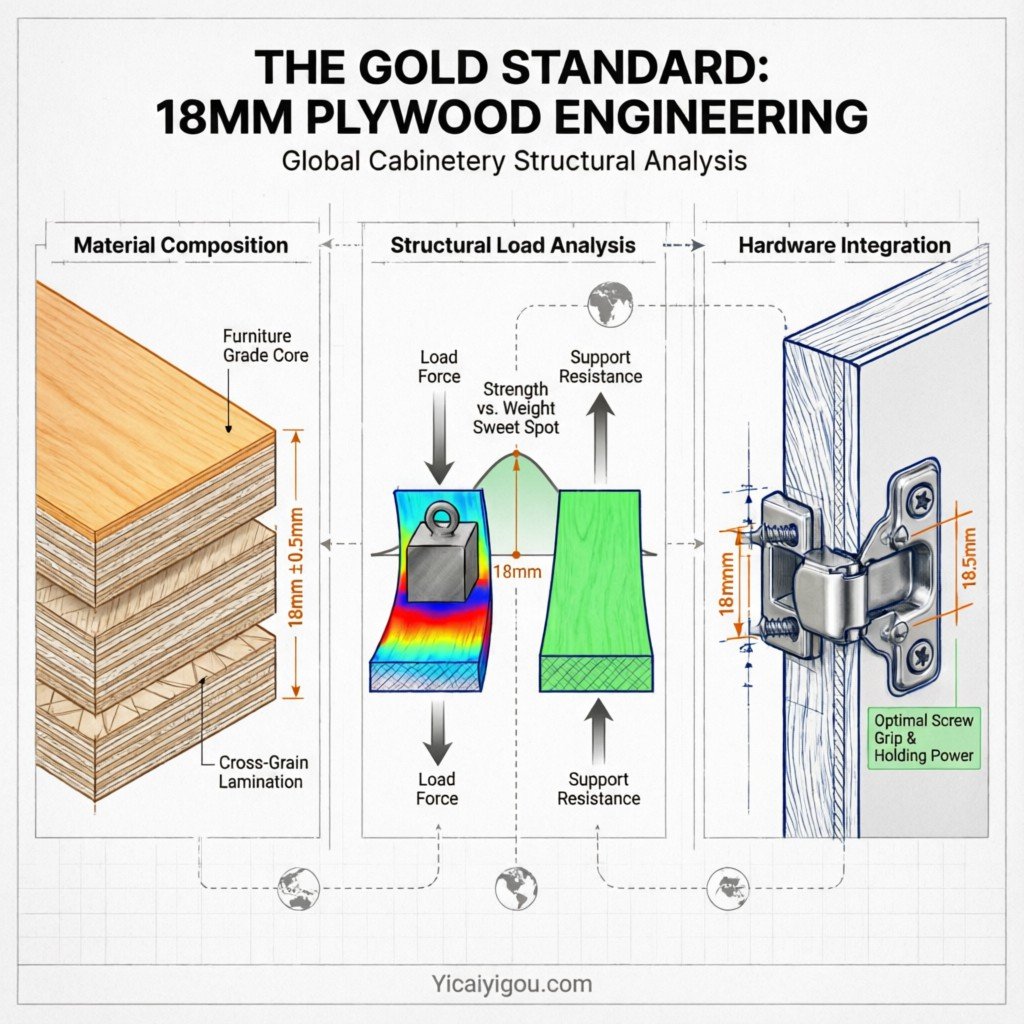
The Engineering Sweet Spot: Strength vs. Weight
The primary reason 18mm plywood reigns supreme lies in the physics of load-bearing capacity versus material weight. In furniture grade plywood applications, the material must be thick enough to prevent sagging over wide spans yet thin enough to remain manageable during installation.
Thinner variants, such as 12mm or 15mm plywood, often require additional stiffeners or reduced shelf spans to maintain structural integrity. Conversely, 25mm plywood offers marginal gains in strength while significantly increasing weight and cost. Industry data suggests that 18mm hardwood plywood provides an optimal modulus of elasticity for standard cabinet carcasses.
It supports typical kitchen loads—dishware, appliances, and cookware—without the deflection issues associated with thinner panels. This balance ensures that cabinetry remains square and true over decades of use, a critical factor for both manufacturers and homeowners.
Compatibility with Modern Hardware Systems
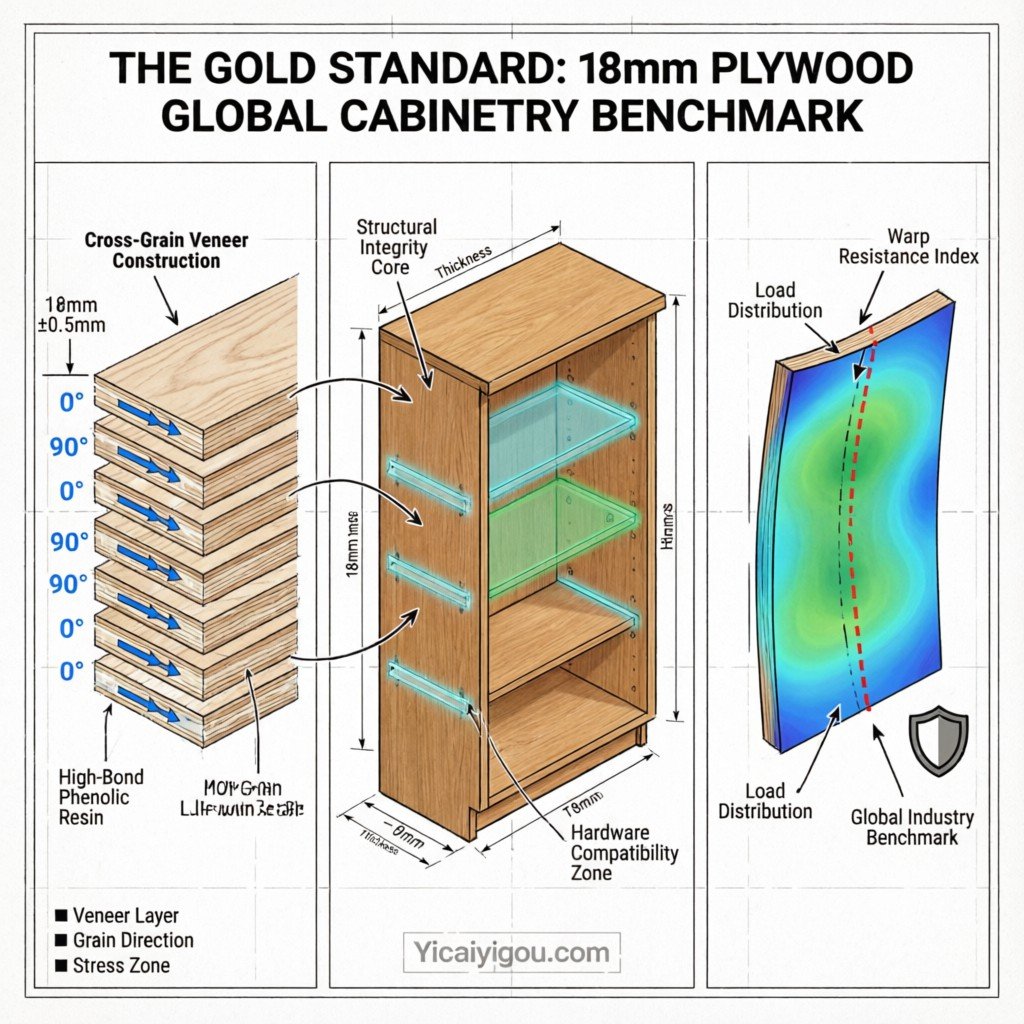
Modern cabinetry standards are inextricably linked to the hardware that brings them to life. The global dominance of European-style frameless construction has cemented 18mm as the norm. Major hardware manufacturers like Blum, Hettich, and Grass design their hinge systems, drawer slides, and connecting fixtures specifically for 18mm carcases.
For instance, the standard 35mm cup hinge requires a specific bore depth and remaining material strength to hold securely. 18mm plywood offers the perfect substrate for these concealed hinges, ensuring that screw withdrawal resistance is maximized without risking breakthrough.
Furthermore, drawer box construction often utilizes 18mm sides for heavy-duty applications, ensuring that the joinery—whether dowel, dado, or dovetail—maintains its grip under dynamic load. Using a non-standard thickness often necessitates custom shimming or specialized ordering, introducing inefficiencies into the production line.
Durability and Moisture Resistance
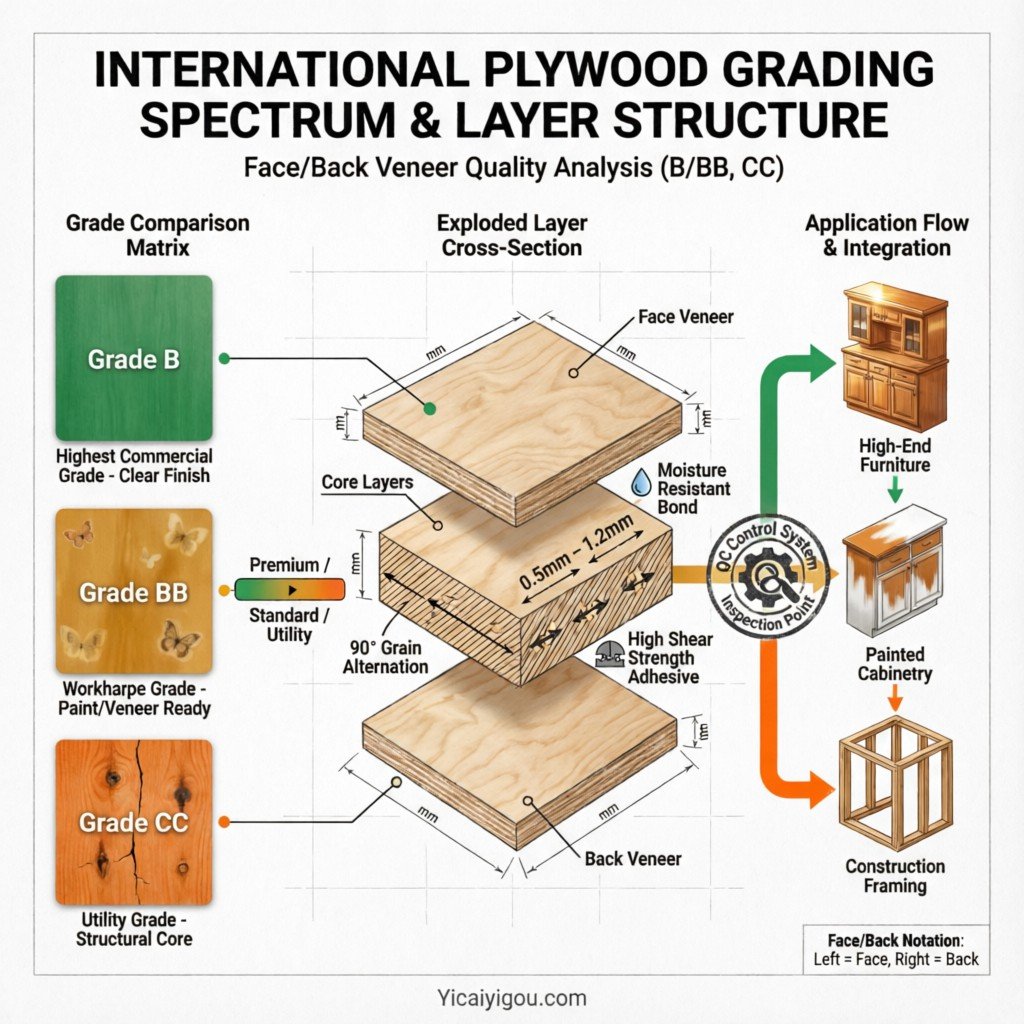
While Medium Density Fiberboard (MDF) and particle board are common alternatives, hardwood plywood offers superior performance in environments prone to moisture fluctuations. Kitchens and bathrooms are high-humidity zones where material stability is paramount. The cross-grained construction of plywood mitigates the expansion and contraction that plagues solid wood and composite boards.
When specified as 18mm MR (Moisture Resistant) or BWP (Boiling Water Proof) grade, this material becomes virtually impervious to warping under normal household conditions. The thickness plays a crucial role here; a thicker veneer core allows for more sanding and refinishing opportunities over the product’s lifecycle. For industry professionals, specifying 18mm plywood reduces callback rates related to swollen edges or sagging shelves, directly impacting profitability and reputation.
Material Efficiency and Cost-Effectiveness
From a manufacturing perspective, yield optimization is critical. Standard sheet sizes, such as 4×8 feet (1220x2440mm) or the metric equivalent 1200x2400mm, are engineered to minimize waste when cut down for 18mm components. Nesting software used in CNC machining is typically pre-calibrated for 18mm stock, allowing for precise kerf adjustments and maximal part yield per sheet.
While the upfront cost of 18mm plywood is higher than particle board, the total cost of ownership is often lower. The material’s durability means fewer replacements, and its strength allows for faster assembly with less need for reinforcement framing. In the wood products industry, time is money.
The ease of machining 18mm plywood—clean edges, minimal chipping, and excellent screw holding—accelerates production timelines. This efficiency makes it a cost-effective choice for high-volume manufacturers who cannot afford production bottlenecks caused by material failure.
Global Compliance and Market Expectations
The harmonization of trade has further solidified 18mm as the standard. In metric markets, 18mm is the explicit specification. In imperial markets, such as the United States, “3/4 inch” plywood is the standard, which sands down to approximately 18mm (23/32 inch). This convergence allows manufacturers to source materials globally without retooling machinery.
Architects and designers specify 18mm because it meets building codes and safety standards across multiple jurisdictions. It is recognized by ANSI and ISO standards for interior fit-outs. For potential customers, seeing 18mm plywood specified in a bill of materials is a signal of quality. It distinguishes premium custom cabinetry from flat-pack, big-box store alternatives that often rely on thinner, less durable composites.
Conclusion
The status of 18mm plywood as the global standard for cabinetry is not a matter of tradition, but of performance. It represents the perfect equilibrium of strength, hardware compatibility, moisture resistance, and manufacturing efficiency. For industry professionals,
it is the reliable backbone of quality construction. For customers, it is an investment in longevity and value. As the wood products industry continues to evolve, the fundamental engineering advantages of 18mm plywood ensure it will remain the cornerstone of superior joinery.
Elevate Your Projects with Premium Materials
Don’t compromise on the foundation of your craftsmanship. Whether you are a large-scale manufacturer or a bespoke joinery shop, sourcing the right material is the first step toward excellence. Contact us today to explore our premium range of 18mm hardwood plywood. Let us supply the standard that builds trust, ensures durability, and defines quality in every piece of cabinetry you create.