Securing Safety: Fire-Retardant MDF Specifications for Commercial Buildings
In the high-stakes environment of commercial construction, safety compliance is not merely a regulatory hurdle; it is a fundamental obligation to protect life and property. As architects, contractors, and facility managers navigate the complexities of interior finish materials, Fire-Retardant MDF (Medium Density Fiberboard) has emerged as a critical component in meeting rigorous safety standards without compromising on design aesthetics. Understanding the essential safety specifications of FR-MDF is vital for ensuring project compliance, reducing liability, and enhancing overall building safety.
The Science Behind Fire-Retardant MDF
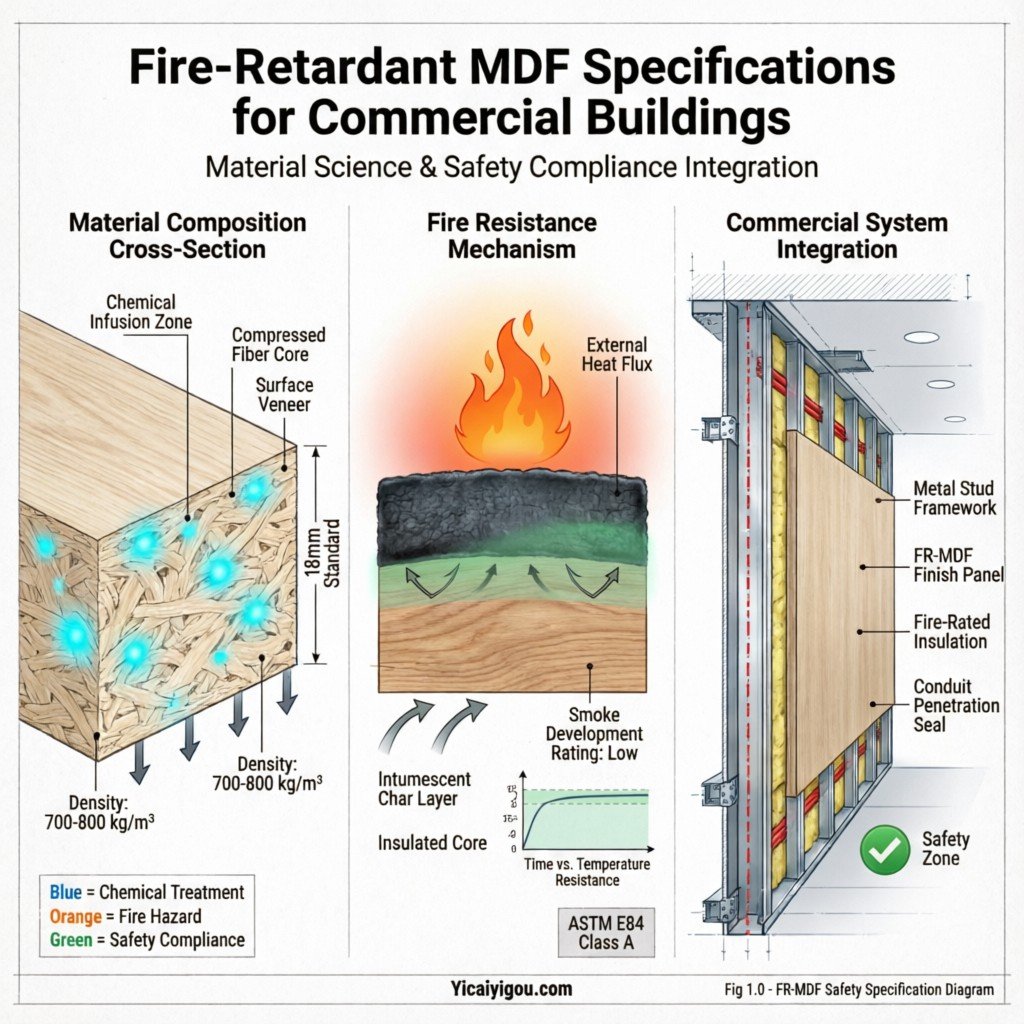
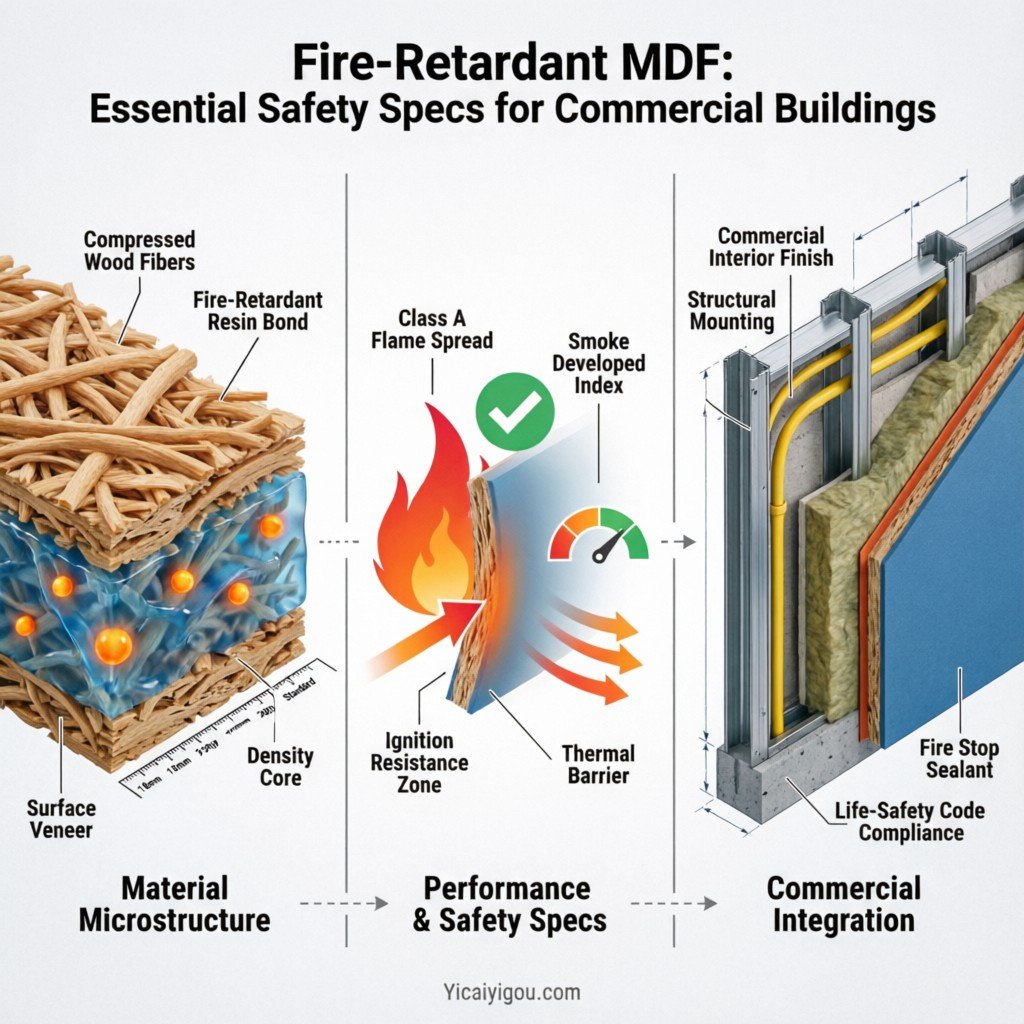
Standard MDF is an engineered wood product prized for its smooth surface and versatility. However, like all wood composites, it is combustible. Fire-Retardant MDF differs fundamentally through a specialized manufacturing process. During production, fire-retardant chemicals are impregnated into the wood fibers before the board is pressed. These chemicals interact with the wood during exposure to heat, promoting charring rather than flaming combustion.
This internal treatment ensures that the fire-retardant properties are consistent throughout the panel, unlike surface coatings that can be compromised by sanding or damage. The result is a material that significantly delays ignition, slows flame propagation, and reduces smoke development. For industry professionals, distinguishing between treated core materials and surface-applied solutions is the first step in specifying the correct product for commercial building safety.
Decoding Safety Ratings and Testing Standards
When specifying FR-MDF specifications, technical data sheets are your primary resource. The most critical metric in the industry is the flame spread rating, determined through standardized testing. In the United States, the governing standard is ASTM E84 (Standard Test Method for Surface Burning Characteristics of Building Materials).
Under ASTM E84, materials are classified based on their flame spread index (FSI) and smoke developed index (SDI):
* Class A (0-25 FSI): Required for most vertical exits and corridors in commercial spaces. High-quality Fire-Retardant MDF typically achieves a flame spread rating of 25 or less.
* Class B (26-75 FSI): Acceptable for general commercial areas depending on occupancy loads.
* Class C (76-200 FSI): Generally insufficient for high-traffic commercial interiors.
For most commercial applications, specifying a Class A rating is the industry best practice. Additionally, professionals must review the Smoke Developed Index. High smoke density can be more lethal than fire itself. Premium FR-MDF products are engineered to keep smoke development low, often below 450, ensuring safer egress paths during an emergency.
Navigating Building Codes and Compliance
Compliance with local and international building codes is non-negotiable. The International Building Code (IBC) and NFPA 101 (Life Safety Code) dictate where fire-retardant materials must be used. These codes vary based on occupancy type (e.g., healthcare, hospitality, retail) and building height.
For example, in exit access corridors and stairwells, the IBC often mandates interior finish materials to meet Class A requirements. Using standard MDF in these zones can lead to failed inspections, costly rework, and significant liability exposure. Furthermore, insurance providers often offer reduced premiums for buildings utilizing certified fire-retardant materials, as they lower the overall risk profile of the asset.
It is crucial to verify that the Fire-Retardant MDF selected carries certification from a recognized third-party agency, such as UL (Underwriters Laboratories) or Intertek. These certifications provide the documented proof needed during plan review and final inspection, ensuring that the wood composite safety measures meet legal standards.
Strategic Applications in Commercial Spaces
The versatility of FR-MDF allows it to be used across various commercial settings where both safety and design are priorities. Common applications include:
- Retail Environments: Wall paneling, display fixtures, and cabinetry in shopping centers must often meet strict flame spread requirements due to high occupancy loads.
- Hospitality: Hotels and restaurants utilize FR-MDF for millwork, headboards, and decorative wall treatments to comply with hospitality safety codes.
- Corporate Offices: Conference room paneling and built-in reception desks benefit from the aesthetic finish of MDF while maintaining interior finish materials compliance.
- Healthcare: Hospitals require stringent safety measures. FR-MDF is used in non-wet areas for cabinetry and casework where durability and safety intersect.
By integrating FR-MDF into these areas, developers can achieve a high-end look without sacrificing the building codes adherence required for occupancy permits.
Installation and Maintenance Best Practices
Even the highest-rated Fire-Retardant MDF can be compromised during installation. To maintain the integrity of the fire rating, industry professionals must follow specific handling protocols.
- Sealing Cut Edges: When panels are cut, the untreated core is exposed. Most manufacturers require that all cut edges be sealed with a specific fire-retardant paint or sealant to maintain the Class A rating.
- Fasteners and Adhesives: Use compatible adhesives that do not negate the chemical treatment. Fasteners should be installed according to the manufacturer’s spacing guidelines to prevent delamination under heat stress.
- Storage and Handling: FR-MDF should be stored in a dry environment. While the treatment protects against fire, the wood fibers can still absorb moisture, leading to swelling or warping before installation.
Proper training for installation crews is essential. A failure to seal edges or improper handling can void the UL certification, rendering the material non-compliant during inspection.
Conclusion: Investing in Safety and Quality
In the lumber and wood products industry, the shift toward safer building materials is accelerating. Fire-Retardant MDF represents a convergence of aesthetic flexibility and rigorous safety performance. For commercial projects, understanding the technical specifications, testing standards, and installation requirements is not just about checking a box; it is about ensuring the longevity and safety of the built environment.
By prioritizing Class A rated materials, adhering to ASTM E84 standards, and following strict installation protocols, contractors and architects can deliver spaces that are beautiful, functional, and safe. The cost of specifying the correct material upfront is negligible compared to the risks of non-compliance and the value of human safety.
Ready to Specify with Confidence?
Ensure your next commercial project meets the highest safety standards without compromising on design. Contact our team today to request technical data sheets, samples, and competitive quotes on premium Fire-Retardant MDF. Let us help you build safer, compliant, and stunning spaces.