Mastering Veneer Splicing Techniques: Book Match vs. Slip Match for Decorative Panels
In the high-stakes world of interior architecture and fine woodworking, the difference between a good project and a great one often lies in the details. Nowhere is this more evident than in the selection and application of wood veneer. For industry professionals and discerning customers alike, understanding veneer splicing techniques is crucial for achieving the desired aesthetic while maintaining manufacturing efficiency.
Among the various methods available, Book Match and Slip Match stand out as the predominant choices for creating stunning decorative panels. This article explores the technical nuances, visual impacts, and practical applications of these two essential splicing methods.
The Art and Science of Veneer Splicing
Wood veneer is sliced from a log, known as a flitch, into thin sheets. To cover large surfaces such as wall paneling, cabinetry, or furniture, these individual leaves must be joined together. This process is known as splicing. The method chosen dictates the grain pattern, symmetry, and overall visual rhythm of the finished product.
According to the Hardwood Plywood & Veneer Association (HPVA), the splice method is a primary determinant in the grading and valuation of veneered panels. While the wood species provides the color and texture, the splicing technique provides the character. Selecting the wrong match can disrupt the visual flow of a room, whereas the right choice can elevate a space into a work of art. Therefore, architects, designers, and manufacturers must collaborate early in the specification process to align veneer splicing techniques with the design intent.
Book Match Splicing: Symmetry and Elegance
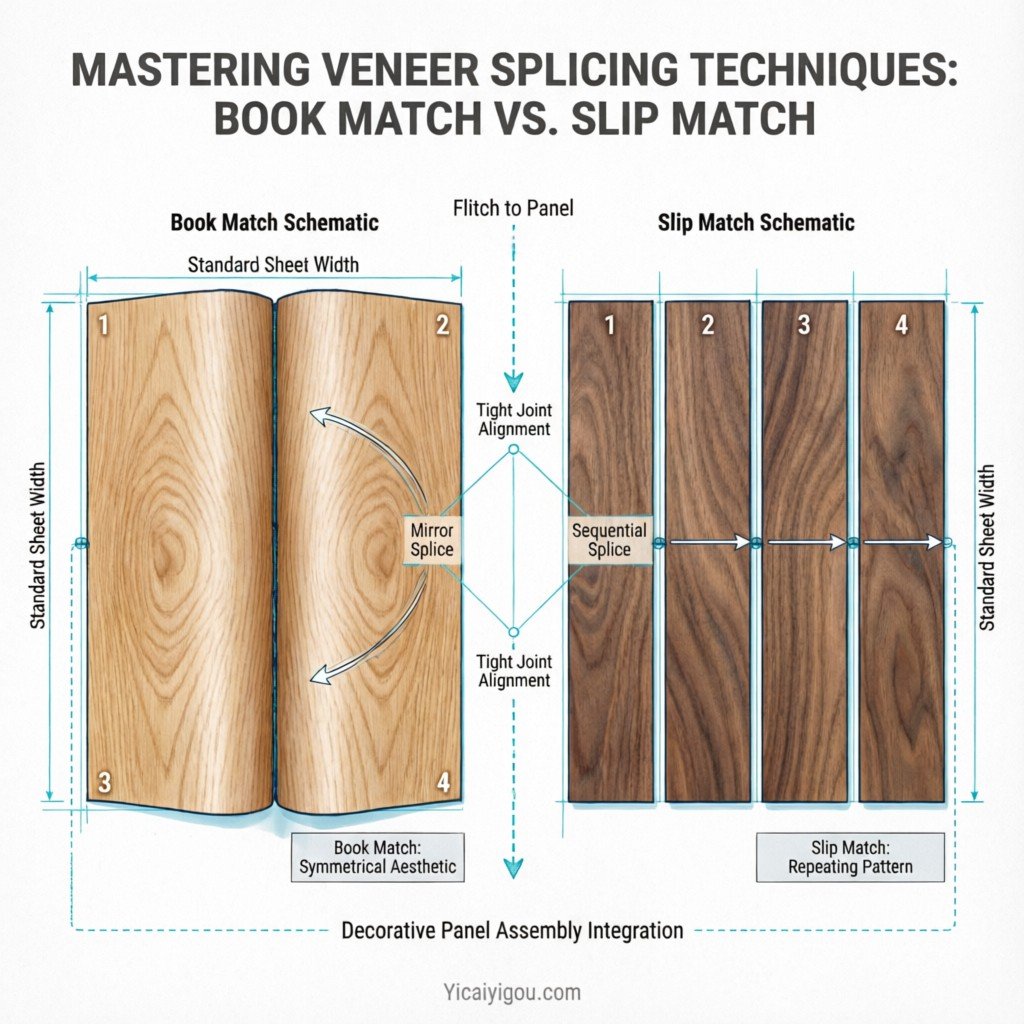
Book Match is perhaps the most recognizable and traditional splicing method in the lumber wood products industry. In this technique, consecutive leaves of veneer are opened like the pages of a book. One leaf is flipped over so that the two adjacent faces match at the splice joint.
Visual Characteristics
The result is a mirror image across the joint. If the veneer has a cathedral grain, the arches will reflect each other perfectly. If the wood is figured, such as Walnut Crotch or Mahogany Ribbon, the book match creates a striking symmetrical pattern that draws the eye. This symmetry conveys a sense of formality, luxury, and balance.
Best Applications
Book matching is ideal for high-visibility areas where aesthetic impact is paramount. Common applications include:
* Executive office wall paneling
* Luxury retail fixtures
* High-end residential cabinetry
* Conference room tables
Technical Considerations
While visually stunning, book matching requires more skill during the manufacturing process. The splicer operator must ensure the grain lines up perfectly at the joint. Furthermore, book matching typically results in a lower yield from the flitch compared to other methods. Because every other sheet is flipped, there can be slight color variations between the “open” and “closed” sides of the veneer leaf, although modern dyeing and finishing techniques often mitigate this. Professionals should anticipate a slightly higher cost per square foot for book-matched decorative panels due to the increased labor and material waste associated with achieving perfect symmetry.
Slip Match Splicing: Consistency and Efficiency
Slip Match splicing offers a different aesthetic philosophy. In this method, consecutive leaves of veneer are placed side-by-side without flipping. Each sheet slides off the flitch in sequence and is joined to the next in the same orientation.
Visual Characteristics
The result is a repeating grain pattern across the panel. Instead of a mirror image, the grain flows in the same direction across the entire surface. This creates a uniform, consistent look that is less formal than book matching but highly effective in modern and contemporary designs. The repetition can create a sense of rhythm and width, making spaces feel larger.
Best Applications
Slip matching is versatile and widely used in both commercial and residential settings. It is particularly effective for:
* Long corridor wall paneling
* Modular office systems
* Kitchen cabinetry runs
* Furniture casework where pattern continuity is preferred over symmetry
Technical Considerations
From a manufacturing standpoint, slip matching is generally more efficient. Because the leaves are not flipped, the yield from the flitch is higher, often reducing material costs by 10-15% compared to book matching. There is also less risk of color mismatch between adjacent leaves, as the same side of the veneer is always facing up. For large-scale projects where budget and consistency are key drivers, slip match veneer splicing techniques provide a robust solution without sacrificing quality.
Selecting the Right Technique for Your Project
Choosing between book match and slip match is not merely a matter of preference; it is a technical decision that impacts cost, timeline, and design integrity. Here are key factors industry professionals should consider:
- Grain Figure: Highly figured woods (e.g., Burl, Quartered Oak) often benefit from book matching to highlight the unique characteristics of the grain. Straighter grains (e.g., Rift Cut White Oak) often look superior in slip match, where the linear consistency is emphasized.
- Panel Dimensions: For very wide panels, book matching can create a “bullseye” effect in the center which may be desirable. For long, narrow runs, slip matching prevents the visual chopiness that can occur with repeated mirror images.
- Budget and Yield: As noted, slip matching offers better yield. If a project has a tight budget but requires real wood veneer, slip matching allows for premium species usage without the premium price tag of book matching waste.
- Lighting Conditions: In spaces with heavy natural light, the symmetry of book matching can catch light differently on either side of the joint. Slip matching provides a more uniform reflection, which can be crucial in brightly lit environments.
Conclusion
The choice between Book Match and Slip Match defines the visual language of your woodwork. Book matching offers unparalleled symmetry and formal elegance, making it the gold standard for luxury interiors. Slip matching provides consistency, efficiency, and a modern rhythm, ideal for expansive commercial applications. Understanding these veneer splicing techniques empowers designers and buyers to make informed decisions that balance aesthetic goals with practical constraints.
In the lumber wood products industry, precision is everything. Whether you are specifying decorative panels for a flagship store or a custom home, the splice method is the foundation upon which the beauty of the wood is built.
Ready to Elevate Your Next Project?
Navigating the complexities of wood veneer specification requires a partner with deep industry expertise. Whether you need custom book-matched panels for a high-profile installation or efficient slip-match solutions for large-scale production, our team is ready to assist. Contact us today to consult with our veneer specialists and request samples for your upcoming project. Let us help you turn raw lumber into refined artistry.