Moisture Content Mastery: Preventing Warping in Overseas Shipments
In the global lumber and wood products industry, few challenges are as costly or as preventable as moisture-related damage during transit. For exporters and manufacturers, the journey from the kiln to the overseas customer is fraught with environmental variables that can turn premium timber into rejected cargo.
Warping, cracking, and mold are not merely aesthetic issues; they represent significant financial losses, damaged reputations, and strained supply chains. Mastering moisture content (MC) is not just a technical requirement—it is a critical business strategy for success in international trade.
Understanding Wood Hygroscopy and Equilibrium Moisture Content
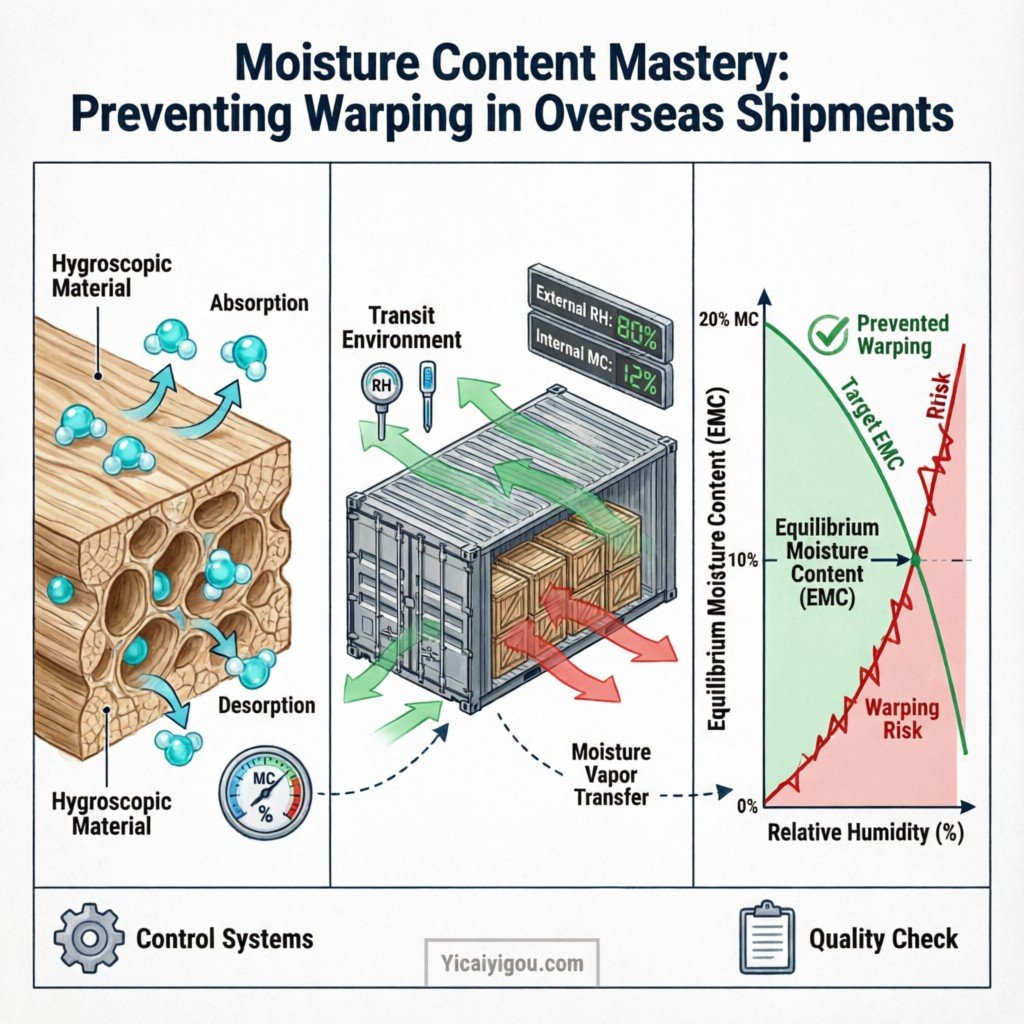
To prevent warping, one must first understand the material. Wood is hygroscopic, meaning it naturally absorbs and releases moisture to reach a balance with the surrounding environment. This balance is known as the Equilibrium Moisture Content (EMC). When wood is shipped from a controlled environment in one climate zone to a drastically different one without proper acclimatization, the rapid exchange of moisture causes the wood fibers to expand or contract unevenly.
For instance, lumber dried to 8% MC in a dry inland facility may be perfectly stable locally. However, if that same lumber is shipped to a coastal region in Southeast Asia where the ambient humidity dictates an EMC of 14%, the wood will absorb moisture rapidly. Conversely, shipping wood with high MC to an arid destination leads to shrinking and checking. Industry data suggests that wood movement can occur with as little as a 1% change in moisture content below the fiber saturation point. Therefore, knowing the destination’s average humidity and targeting the appropriate MC before shipment is the foundational step in quality assurance.
The Perils of International Logistics: Container Rain and Climate Shifts
Overseas shipments introduce unique risks that domestic transport does not. The most notorious of these is “container rain” or “cargo sweat.” During ocean transit, shipping containers are subjected to extreme temperature fluctuations. Days of intense heat followed by cool nights cause condensation to form on the interior walls and ceiling of the container. This water drips onto the cargo, potentially raising the moisture content of the wood surface by several percentage points in a matter of days.
A standard 40-foot container can generate up to 30 liters of water through condensation during a typical voyage. Without protection, this moisture infiltrates wood packaging and lumber stacks, leading to mold growth and structural warping. Furthermore, transit times can range from two to six weeks, prolonging exposure to these hostile conditions. Professionals must account for the microclimate inside the container, not just the weather at the port of loading or discharge. Ignoring these variables is a primary cause of claims and rejected shipments in the wood products sector.
Strategic Drying and Packaging Protocols
Mitigating these risks requires a multi-layered approach starting at the kiln. Proper kiln-drying protocols must align with the destination’s EMC rather than just domestic standards. For high-value furniture components destined for humid climates, drying slightly lower than the target EMC allows for some absorption during transit without exceeding safety thresholds. However, drying too low can make wood brittle. Precision is key.
Once dried, packaging becomes the first line of defense. Vapor barrier bags are essential for sealing moisture out. These specialized liners create a hermetic seal around the cargo, preventing humidity exchange. Additionally, the use of desiccants is critical. Silica gel or clay desiccants placed strategically within the container absorb excess ambient moisture, controlling the relative humidity inside the shipping unit. Industry best practices recommend calculating the required units of desiccant based on the container’s volume, the duration of the voyage, and the breathable surface area of the wood.
Furthermore, stacking methods matter. Using dry dunnage and ensuring air circulation within the package prevents trapped moisture. For wood packaging materials like pallets and crates, compliance with ISPM 15 standards is mandatory to prevent pest transfer, but these materials must also be dry to avoid acting as a moisture source for the primary cargo.
Compliance and Quality Assurance Standards
In the modern marketplace, compliance extends beyond phytosanitary regulations. Major retailers and construction firms often have strict specifications regarding moisture content tolerances, typically requiring verification upon arrival. Utilizing calibrated moisture meters—both pin and pinless types—during the pre-shipment inspection process provides documented proof of quality.
Digital data loggers placed inside containers can also track temperature and humidity throughout the journey. This data is invaluable when disputing claims; it proves whether the cargo was exposed to conditions outside the agreed parameters. Implementing a robust Quality Assurance (QA) protocol that includes pre-shipment MC testing, proper packaging verification, and transit monitoring demonstrates professionalism and reduces liability. It transforms moisture control from a reactive fix into a proactive guarantee of product integrity.
Conclusion
Preventing warping in overseas shipments is not about luck; it is about science, planning, and execution. By understanding the hygroscopic nature of wood, anticipating the harsh realities of ocean freight, and implementing rigorous drying and packaging standards, manufacturers can safeguard their products and their profits. Moisture content mastery is the differentiator between a supplier that faces constant claims and one that builds long-term trust with global partners.
Secure Your Shipment Quality Today
Don’t let moisture undermine your international expansion. Partner with industry experts who understand the complexities of global wood logistics. Contact our team today for a comprehensive consultation on drying protocols, packaging solutions, and moisture management strategies tailored to your specific export markets. Ensure your lumber arrives exactly as it left—perfectly stable and ready for use.